


A former senior federal official has pleaded guilty to defrauding the U.S. government of approximately $194 million by inventing classified programs to fund personal purchases, including 298 gold bars, luxury properties in South Florida, high-end watches, and two BMW vehicles.
David J. Rush, who held senior executive roles and possessed a top-secret clearance, entered his plea in federal court in Alexandria, Virginia. The agreement includes a restitution obligation of at least $195.4 million, reflecting the $193.6 million lost to the scheme, along with $1.8 million in unauthorized charter flights. The case was referred to the FBI by the CIA after an internal investigation raised concerns about potential illegal activities.
U.S. Attorney General Todd Blanche emphasized the commitment of the Trump Administration to eliminate waste and fraud within federal operations, insisting that you hold those who exploit public trust accountable. CIA Director John Ratcliffe echoed this sentiment, noting Rush’s betrayal of the American public.
Rush misused his position by fabricating two programs between late 2025 and early 2026. The first involved a fictitious Special Access Program designed to justify the purchase of luxury real estate. By misleading contractors and deciding on resource allocations himself, he effectively circumvented oversight. He directed $145 million to a company he established for consulting services, which facilitated the acquisition of high-value properties in Palm Beach.
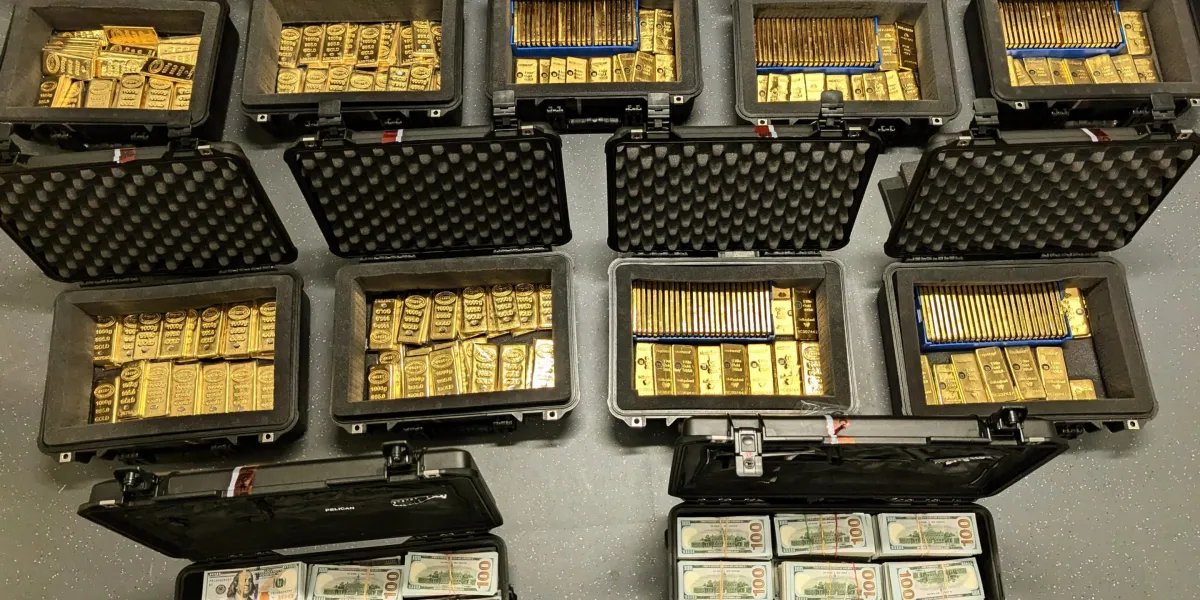
The second program led to the purchase of 298 gold bars, costing the government over $46 million. Federal agents discovered these bars, along with $2.1 million in cash and multiple luxury watches, during a search of Rush’s residence.
Having likely attained his position through fabricated credentials, Rush faces a potential 20-year prison sentence at his upcoming sentencing on January 28, 2027, while investigations continue into additional misconduct.
- Why this story matters: Illustrates abuse of power in government and the impact of fraud on taxpayer resources.
- Key takeaway: Accountability mechanisms are in place to address corruption within federal agencies.
- Opposing viewpoint: Some may argue that the prosecution reflects a broader issue of systemic failures in oversight and prevention of such fraudulent activities.