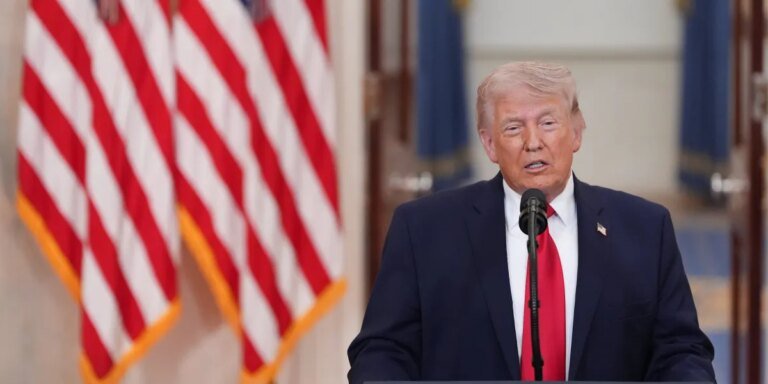



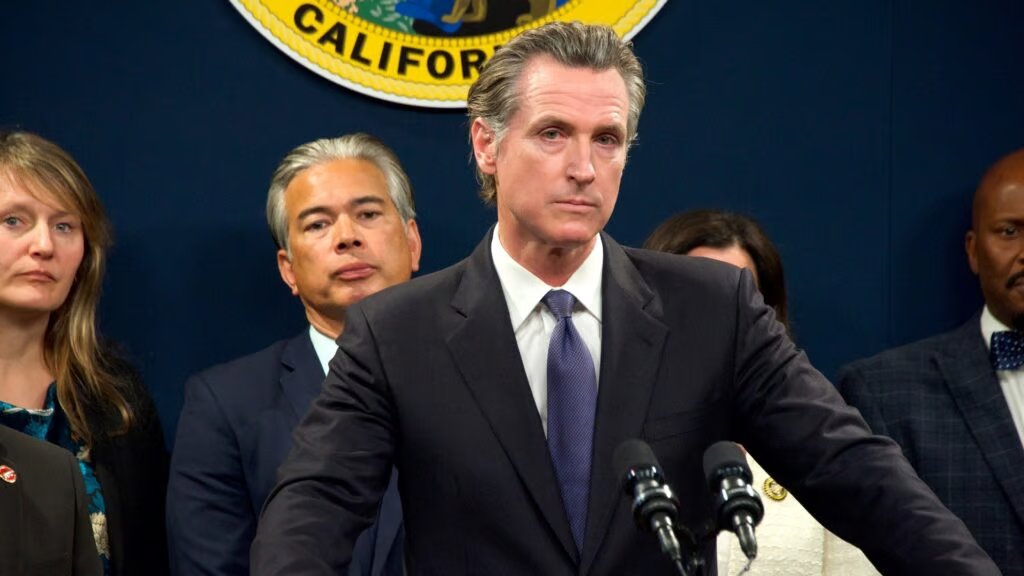
California Governor Gavin Newsom has intensified his criticism of former President Donald Trump’s trade policies, particularly in light of a recent Supreme Court ruling that invalidated many of Trump’s tariffs. In a post on X, Newsom called these tariffs “madness” and labeled Trump a “fraud,” claiming that his economic policies revolve around “mass deportations, tax cuts for billionaires, and tariffs.”
During a CNN interview, Newsom expressed skepticism about Trump’s proposal for a 15% global tariff, questioning how businesses would respond under such uncertain conditions. He characterized the situation as “a farce” and raised concerns about the fluctuating nature of tariffs, suggesting they could rise from 10% to 20% unpredictably.
Newsom asserted that California was the first state to challenge the tariffs under the International Emergency Economic Powers Act, declaring them illegal from the outset. He emphasized the financial burden on families, estimating that each household pays approximately $1,701 annually due to these tariffs. He called for a refund of this money, plus interest, to affected families.
In the wake of the Supreme Court ruling, several lawmakers are expected to challenge Trump’s tariff strategy. Representative Don Bacon (R-Neb.) indicated that Congress has a responsibility to regulate trade policy, while Senator Mitch McConnell (R-Ky.) highlighted the importance of congressional authority in this arena. Conversely, Democratic leaders criticized Trump’s tariff approach, with Senate Minority Leader Chuck Schumer condemning it as misguided and Senate Representative Adam Schiff arguing it lacked constitutional backing.
Why this story matters:
- The tension surrounding tariffs affects economic conditions for American families and businesses.
Key takeaway:
- The Supreme Court ruling has opened the door for legislative challenges to Trump’s tariff policies.
Opposing viewpoint:
- Some lawmakers argue that the administration’s trade provisions are necessary to address trade deficits, despite widespread criticism.