

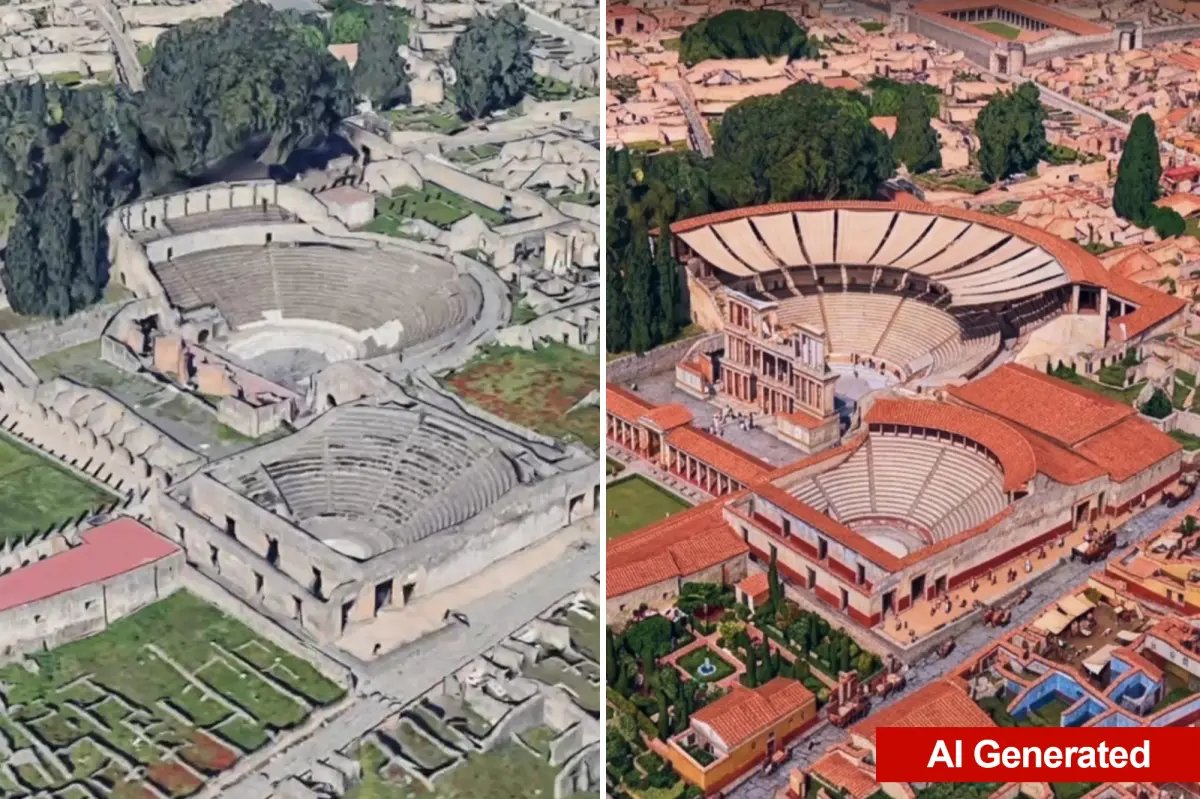
Google has decided to remove a recently launched AI image-generation feature from Google Earth after receiving concerns regarding its potential for misinformation. The tool, introduced just one day prior, allowed users to create realistic satellite images from text prompts, leading to disturbing and fabricated visuals such as bomb blasts in prominent cities.
Powered by Google’s Nano Banana 2 technology, the feature attracted significant user engagement, with individuals quickly generating alarming scenarios, including war-torn urban areas and fictitious homeless encampments. Users reported that they could create images depicting nonexistent events, such as nuclear plants in Iran or crashes in Amsterdam, by entering simple text commands.
Critics, including investigative journalist Ben Huebel, expressed strong disapproval, labeling the tool as “irresponsible” and detrimental to accurate investigations. In a LinkedIn post, Huebel highlighted the ease with which users could generate misleading content, emphasizing that it poses challenges for verification efforts, particularly amid ongoing global conflicts.
Despite Google promoting the feature as a visual aid for historical reconstruction and urban planning, many users quickly diverted its use toward generating harmful and misleading images. In response to backlash on social media, Google acknowledged its commitment to tackling misinformation and indicated we should expect enhanced safeguards in future iterations of the tool.
Before officially rolling back the feature, Google assured users that all generated images contained an invisible digital watermark to help in identifying AI-produced content. Nonetheless, the rapid withdrawal of the tool underlines the complexities and risks associated with AI technologies in public platforms.
Why this story matters
- Highlights potential dangers of misleading AI-generated content.
Key takeaway
- Google is prioritizing user safety by retracting features that could contribute to misinformation.
Opposing viewpoint
- Some argue that the tool could have valuable applications if implemented with stronger safety measures.