



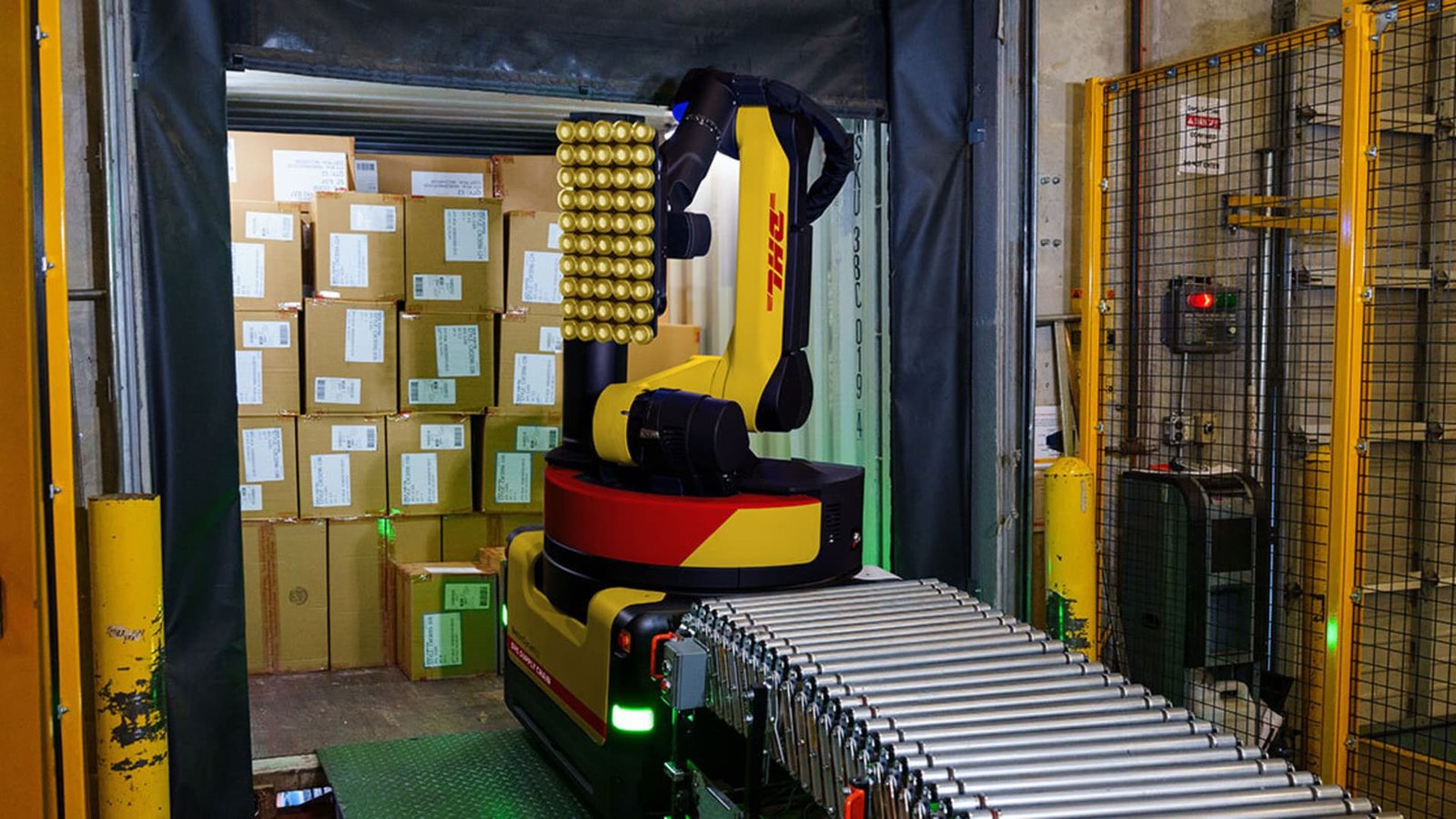
DHL Group has significantly reduced the physical demands on its employees by deploying autonomous mobile robots in its warehouses. Previously, workers walked extensive distances each day, often covering nearly a half marathon to sort, pick, and move goods. Thanks to advancements in technology, these robots can now unload containers at a rate of up to 650 cases per hour. According to Tim Tetzlaff, DHL’s global head of digital transformation, the company has ramped up its automation projects from 240 in 2020 to over 10,000, with these innovations enhancing efficiency in 95% of its worldwide warehouses.
For instance, item-picking robots in one facility have elevated productivity by 30%, while automated forklifts have boosted operational efficiency by 20%. Tetzlaff emphasized the necessity of automation in a labor-intensive industry, as labor shortages hinder the establishment of new distribution centers. Other companies in the logistics sector, including UPS and FedEx, are also turning to automation. UPS has automated operations in 127 buildings and plans to expand this to 68% of U.S. volume processing by year-end. Moreover, FedEx is investing in robotic arms to improve package processing and has initiated partnerships to enhance its automation capabilities.
While automation has led to efficiency gains, it raises concerns about job losses. Some companies have experienced layoffs, with UPS announcing cuts exceeding 75,000 employees as part of their efficiency plans. However, industry experts, including Accenture’s logistics lead Benjamin Reich, suggest that automation doesn’t necessarily mean job replacement but rather a transition toward different skill sets. The industry is expected to see increased investments in automation, enhancing operational efficiency while continuing to require human workers.
Why this story matters:
- Reflects the broader trend of automation in logistics, impacting both efficiency and employment.
Key takeaway:
- Automation in the logistics sector can enhance efficiency while requiring a shift in workforce skill sets rather than outright job elimination.
Opposing viewpoint:
- Unions and industry experts express concerns over job losses and advocate for ensuring that technology development supports rather than undermines workers’ roles.