


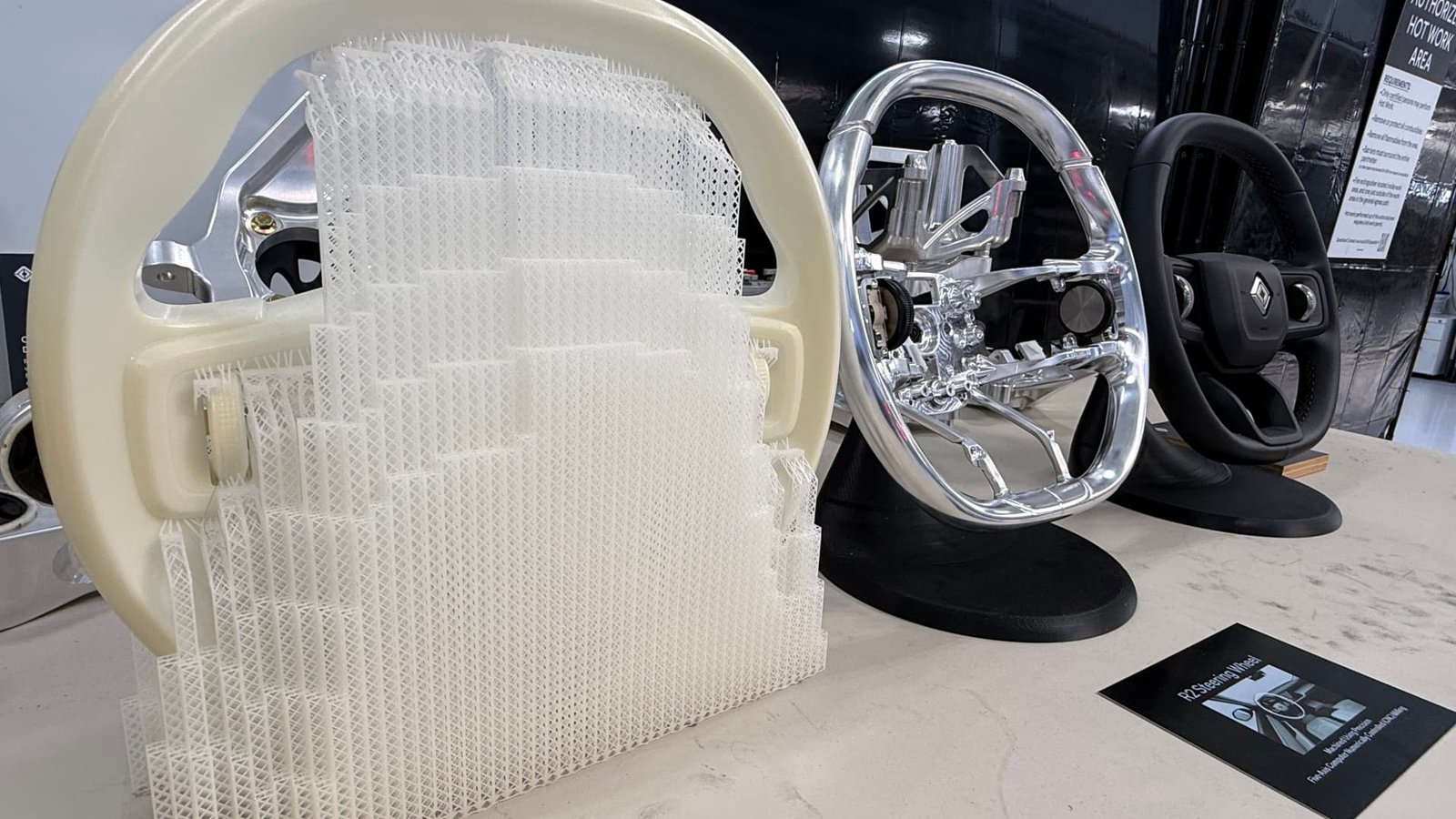
DETROIT – Leading automakers such as Ford Motor and Rivian Automotive are increasingly adopting 3D printing technology to enhance their manufacturing processes. This approach is being utilized to lower costs and accelerate production timelines across various stages of vehicle assembly. While 3D printing has been in existence for decades, its adoption in the automotive sector is becoming more widespread, enabling companies to manufacture everything from vehicle parts to assembly tools.
Jared Beck, head of Rivian’s additive manufacturing, emphasized the need for the company to fully incorporate 3D printing, projecting a move toward democratizing this technology within the organization. 3D printing, or additive manufacturing, allows for the creation of three-dimensional objects through a layer-by-layer deposition of materials like plastics, ceramics, and metals, providing flexibility and efficiency in production.
Rivian’s investment in 3D printing has exceeded $5 million, with ongoing annual material costs of approximately $1.7 million. Despite these expenditures, the technology often recoups costs within a year by significantly reducing both supplier tooling expenses and production time—from weeks to mere hours. Rivian aims to expand its capabilities by adding machines for making flexible silicone parts.
In contrast, established manufacturers like Ford and General Motors have been integrating 3D printing technology for years. Ford has developed departments across its plants specifically for additive manufacturing, employing a vending machine system to ensure on-demand access to 3D-printed parts. The strategy has proven advantageous, enabling quicker production of unique tools and parts, thus enhancing efficiency on assembly lines.
GM similarly utilizes 3D-printed components for low-volume products and research, exemplifying the industry’s shift towards more standardization and scalability in additive manufacturing.
Why this story matters: The adoption of 3D printing in automotive manufacturing represents a significant shift toward efficiency and cost reduction in the industry.
Key takeaway: 3D printing enhances production speed and lowers costs for automakers, potentially revolutionizing manufacturing processes.
Opposing viewpoint: Concerns remain about the reliability and performance of 3D-printed parts compared to traditionally-manufactured components, which may impact long-term sustainability.