


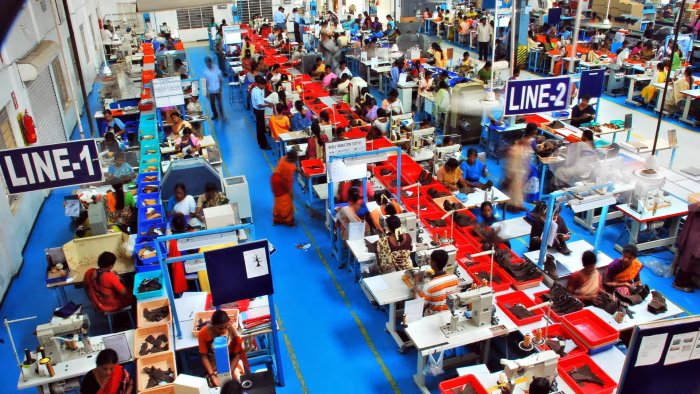
Farida Group, one of India’s major shoemakers, has become emblematic of the country’s role in global supply chains following a substantial investment in an export facility in Tamil Nadu. The company announced a Rs10.1 billion ($114 million) project last year, aimed at boosting production for brands like Cole Haan and Clarks. However, a significant challenge emerged when former U.S. President Donald Trump imposed a 50% tariff on Indian exports due to geopolitical tensions regarding Russian oil purchases, which caused new orders to dwindle and halted the Tamil Nadu project.
With total exports to the U.S. valued at $87 billion in the previous year, the situation presents a dilemma for Farida. Company leadership is faced with three strategic options: continuing to export to the U.S. while implementing cost reductions and renegotiating contracts; pivoting towards markets in Europe, Asia, and the Middle East with lower tariffs; or reducing production aimed at the U.S. to focus on domestic and niche segments.
Policymakers meanwhile contemplate their own choices, such as engaging diplomatically with the U.S. and using India’s growing strategic importance to negotiate tariff reductions. Emergency measures might include subsidized financing, wage support, and tax breaks for affected exporters. Amidst this uncertainty, the Modi administration indicated potential progress on a new trade agreement with the U.S., which could lower tariffs to 15%.
As Farida looks to diversify, it has formed a partnership with Taiwan’s CJ Enterprise to produce New Balance footwear and is expanding its operations, betting on the hope of lower tariffs and new revenue streams. While such moves carry risk, they also aim to insulate the company against fluctuations in the international market, particularly the uncertainties stemming from geopolitical developments.
Why this story matters
- The impact of high tariffs on India’s export-driven economy and businesses.
Key takeaway
- Companies like Farida are exploring diversification strategies in response to geopolitical trade challenges.
Opposing viewpoint
- Critics argue that expanding production without resolution of trade issues may expose companies to higher risks.