


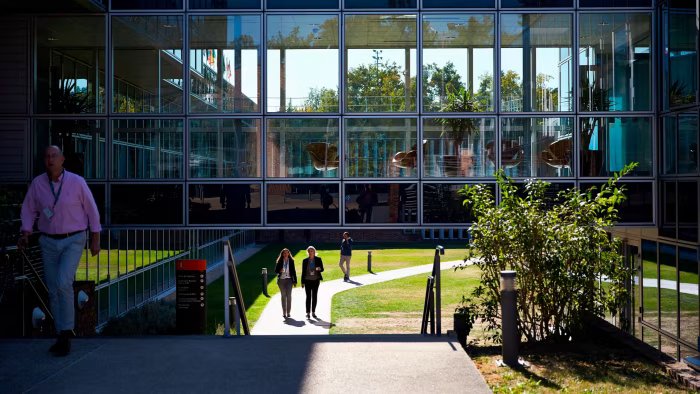
Insead has been recognized as the leading European business school in the Financial Times’ 2025 European Business Schools Ranking, surpassing HEC Paris and London Business School, which ranked second and third, respectively. This is the second consecutive year Insead, located in Fontainebleau, France, achieved the top spot, having excelled across various categories including MBAs, Executive MBAs, and Masters in Management.
Francisco Veloso, Dean of Insead, emphasizes the school’s commitment to a global perspective, noting its campuses in Singapore and Abu Dhabi as strategic locations in rapidly growing markets. He acknowledges the transformative potential of artificial intelligence (AI) and its importance in the curriculum, likening its impact to the industrial revolution. Veloso highlights the need for responsible and ethical approaches to leveraging such technologies in business.
Amidst a decline in MBA demand in North America and Europe, Insead has expanded its offerings to include pre-experience Masters programs in response to an increase in interest from recent graduates. While U.S. business schools reported a slight drop in applications, European institutions have seen an 11 percent increase overall, excluding the UK, which experienced a 4 percent decline. Notable rankings included Iese for MBA programs and ESCP for Executive MBAs.
The landscape of European business education also faces challenges, including financial pressures related to international student enrollment, particularly as some countries, like the UK, tighten visa regulations for prospective students. Additionally, diversity remains an issue, with only 10 of the 100 ranked schools achieving gender parity among faculty members.
Why this story matters:
The ranking highlights the evolving landscape of business education and the responses of top institutions to global market demands.
Key takeaway:
Insead’s focus on international markets and innovative curriculum positions it as a leader in adapting to changing business education needs.
Opposing viewpoint:
Some may argue that the increasing barriers for international students in the UK and elsewhere could hinder diversity and competitiveness in business schools.