



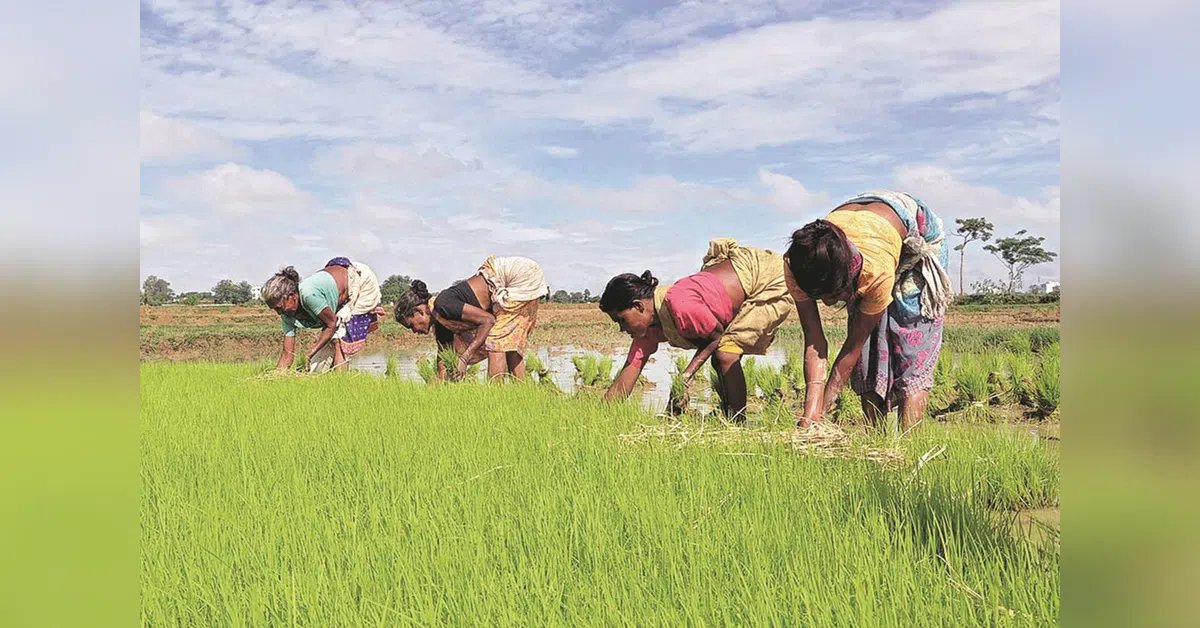
Sowing of kharif crops has gained momentum in the week ending July 5, 2026, as monsoon activity increased across India. However, the current sowing levels remain approximately 21% lower than the same period last year, according to the Ministry of Agriculture. Experts note that with robust rain anticipated to cover the entire country by the end of the week, there is potential for further improvement in sowing activity. July is crucial for kharif crop planting, making any significant increase in rainfall advantageous for farmers.
As of July 7, the southwest monsoon has been particularly active, with rainfall recorded at 51% above normal in certain areas. This has reduced the cumulative rainfall deficit to about 17% since June 1, a notable improvement from nearly 40% at the end of June.
Current figures show that major kharif crops such as paddy and pulses are experiencing declines in area sown compared to last year. For instance, paddy sowing reached 6.02 million hectares, a 13.1% decrease from 2025, while oilseed sowing fell significantly, with a 39.3% reduction noted. While cotton sowing also declined by 23%, sugarcane saw a slight increase of 1.4%.
Overall, while the monsoon’s resurgence is encouraging for farmers, the ongoing lower sowing figures indicate challenges that need to be addressed to maximize the agricultural output for the kharif season.
Why this story matters: The kharif season is vital for India’s agricultural economy and food security.
Key takeaway: Despite improved monsoon conditions, kharif sowing remains significantly behind last year’s figures.
Opposing viewpoint: Some argue that the reliance on monsoon rains presents inherent risks for crop planning and yield.