

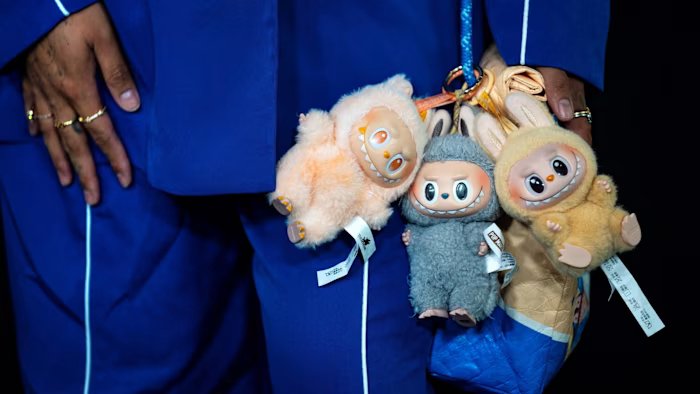
In central Shanghai, long lines form outside Pop Mart, as eager customers await the opportunity to purchase blind boxes containing coveted mystery figurines, notably Labubu, a character described as “ugly-cute.” Initially launched in 2019, Labubu has propelled Pop Mart into a global spotlight, raising questions about the character’s legacy as it transitions from niche collectible to a mainstream franchise.
Founded in 2010 by Wang Ning, Pop Mart began as a retailer of novelty items and shifted focus in 2019 to original character creation. This pivot allowed the company to enhance its margins and market presence by investing in artist collaborations for unique designs. Labubu has proven to be a significant driver of Pop Mart’s revenue, accounting for over one-third of total earnings. The success of Labubu and similar products has positioned Pop Mart as a leading force in the designer toy market, surpassing traditional toy giants like Hasbro and Mattel in valuation.
Pop Mart’s marketing strategy revolves around scarcity and emotional engagement, utilizing social media and exclusive launches to create fervor among collectors. Operating in over 30 countries, the company has seen substantial growth, with projections estimating revenues from blind boxes to reach approximately $1.8 billion by 2024. However, challenges loom as Pop Mart seeks to balance limited product availability with increasing global demand, and it faces scrutiny regarding the blind-box purchasing model’s impact on consumers.
As the novelty of blind-box collecting may wear off, Pop Mart must navigate the evolving landscape of brand loyalty, ensuring that it maintains its creative edge while expanding internationally.
Why this story matters
- Highlights the evolving dynamics in the collectible toy market.
Key takeaway
- Pop Mart’s success hinges on balancing scarcity with expansion while maintaining consumer engagement.
Opposing viewpoint
- Critics raise concerns about the potential addictive nature of blind-box purchasing, questioning its impact on youth consumers.