



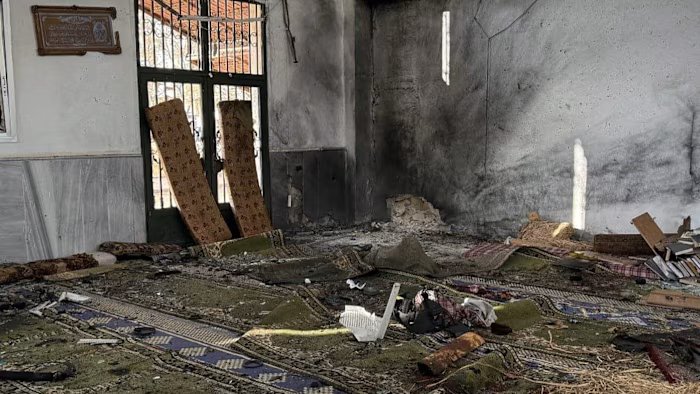
An explosion at the Imam Ali bin Abi Talib mosque in Homs, Syria, resulted in the deaths of at least eight individuals and injuries to 18 others during Friday prayers. The attack, attributed to devices planted within the mosque, has been described by authorities as an effort to destabilize the country. This incident occurred in a predominantly Alawite district, highlighting the ongoing tensions between the Alawite minority and the Sunni majority, particularly following the fall of Bashar al-Assad’s regime last year.
Syria’s foreign ministry condemned the bombing as a “terror crime,” characterizing it as part of broader efforts to incite chaos within the nation. This attack coincides with increased security challenges for President Ahmed al-Sharaa’s government, marking the year since he took power. Recent violence, including clashes involving the Druze minority, has exacerbated fears among Syria’s diverse sects. In June, a suicide bombing targeting a church in Damascus resulted in over 20 fatalities, further underscoring the sectarian strife in the region.
The Supreme Islamic Alawite Council decried the bombing as a continuation of targeted extremist terrorism against the Alawites and other ethnic groups in Syria. In a related statement, Syria’s information minister suggested that remnants of the former regime, along with the Islamist extremist group Isis, are collaborating to undermine the new government and disrupt civil peace. The militant group Saraya Ansar al-Sunna claimed responsibility, stating that one of its members also conducted the earlier church bombing.
Security forces have cordoned off the mosque as investigations continue into the attack, amidst a backdrop of recent sectarian violence that has claimed numerous lives.
Why this story matters: Highlights ongoing sectarian tensions and violence in Syria, affecting national stability.
Key takeaway: The attack is part of a broader pattern of extremist violence targeting minorities, exacerbating fears of civil unrest.
Opposing viewpoint: Some may argue that government accusations distract from the complexities of the sectarian conflict, reflecting deeper political issues beyond terrorism.