



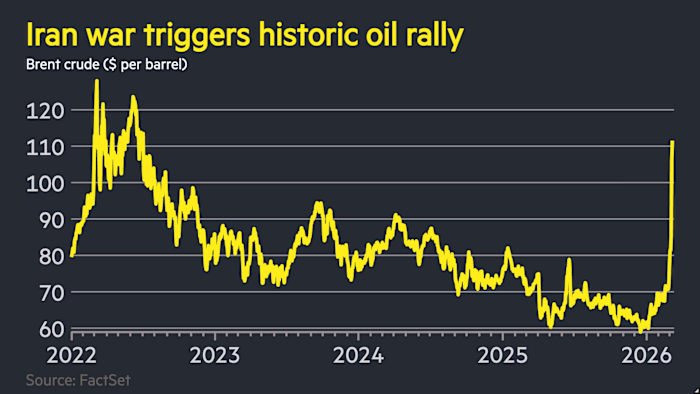
Oil prices have surpassed the $100-per-barrel mark for the first time in nearly four years, driven by escalating conflict in the Middle East and the possibility of significant supply interruptions. Brent crude, the international benchmark, surged by 20% to $112.40 a barrel, while West Texas Intermediate (WTI) increased by 23% to $112.55 during trading in Asia on Monday. This follows a record weekly increase sparked by recent military actions involving the U.S. and Israel against Iran and the decision of several major Middle Eastern producers to reduce output.
Traders have expressed concern about potential long-term disruptions in oil supply, particularly regarding the Strait of Hormuz, a critical shipping route that accounts for a substantial portion of global oil exports. Bob McNally, founder of the Rapidan Energy Group, highlighted the market’s rapid shift in perspective, now pricing in an unprecedented level of oil disruption.
In addition to these developments, reports indicate that additional attacks on energy infrastructure could further contribute to rising prices. Michael Alfaro, head of investment at Gallo Partners, noted that concerns over the prolonged nature of the crisis continue to elevate market volatility.
Goldman Sachs has warned that if flows through the Strait of Hormuz remain impaired, oil and refined products could reach historic highs. Saudi Arabia, Kuwait, and Iraq have already made cuts to their production in response to the situation, raising fears that they may soon reach capacity limits in their storage facilities.
In related developments, Iran’s oil production remains hindered by U.S. sanctions and ongoing military skirmishes, raising the specter of a wider conflict affecting global energy supplies.
Why this story matters
- The surge in oil prices affects global markets and consumer costs.
- Heightened geopolitical tensions could lead to further instability in energy supplies.
Key takeaway
- The conflict in the Middle East may cause prolonged oil supply disruptions, significantly impacting global prices.
Opposing viewpoint
- Some analysts argue that price increases may stabilize once geopolitical tensions de-escalate, mitigating long-term effects on the market.