


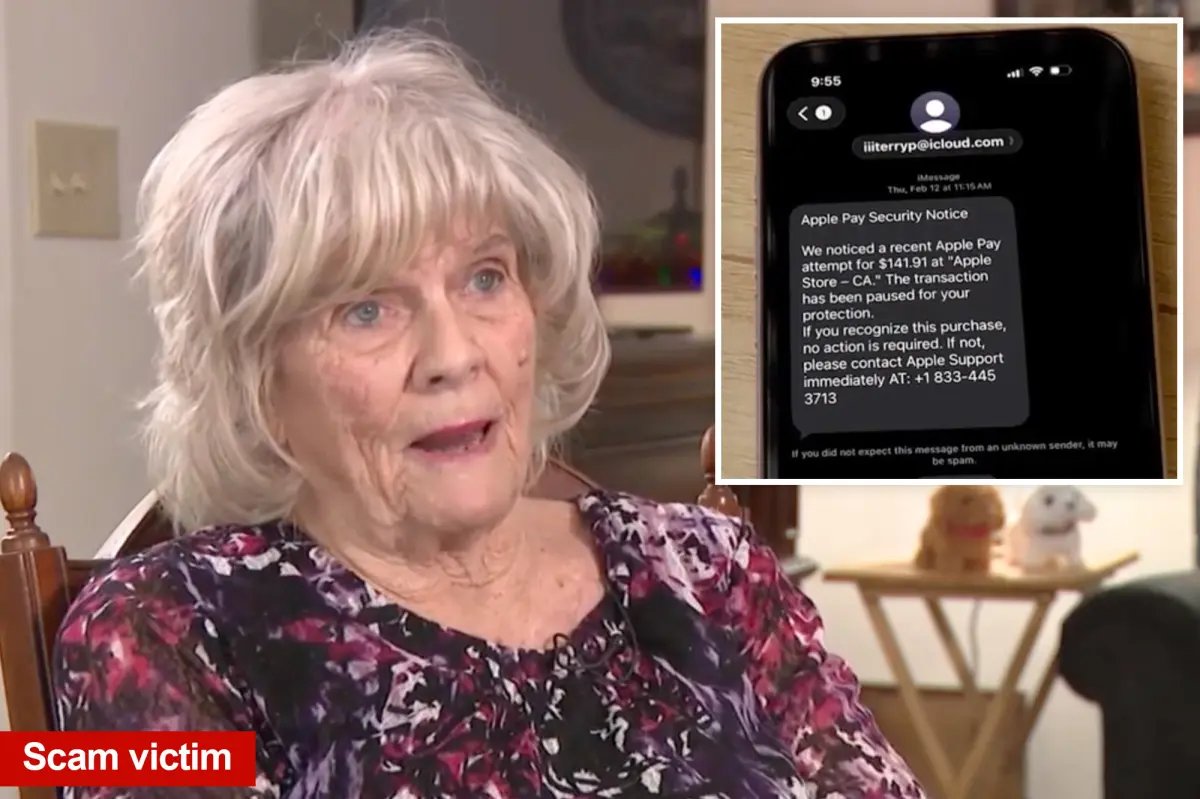
A Pennsylvania woman lost $24,000 to a scam after receiving a text message that sparked fears about the safety of her bank account. Identified only as Barbara, she received a message labeled "Apple high alert," claiming that money had been stolen from her account. Following the instructions in the message, she called a number provided, where a man claimed that hackers had accessed her accounts and urged her to withdraw her funds for protection.
Trusting the caller’s instructions, Barbara went to her bank and wired the money to a specified account, believing it was the only way to safeguard her assets. However, within hours, the funds had been transferred to a fraudulently created bank account, ultimately ending up in China. Barbara is now unlikely to recover her lost money.
Detective Jonathan Martin of the Manheim Township Police Department highlighted that this incident is indicative of a growing type of fraud known as "bank impersonation" or "bank investigator" scams. These schemes exploit victims’ fears by posing as legitimate financial institutions through text messages, emails, or phone calls. Scammers often impersonate fraud departments or law enforcement to create a sense of urgency, pressuring victims to act quickly.
Experts emphasize that any request to wire money or transfer funds is a major red flag. They advise individuals to independently verify communications by contacting their financial institutions using phone numbers listed on official materials, rather than those provided in suspect messages.
Why this story matters:
- It sheds light on the increasing sophistication of financial scams.
Key takeaway:
- Verify any urgent financial requests through official channels.
Opposing viewpoint:
- Some may argue that increased consumer awareness could reduce susceptibility to such scams.