



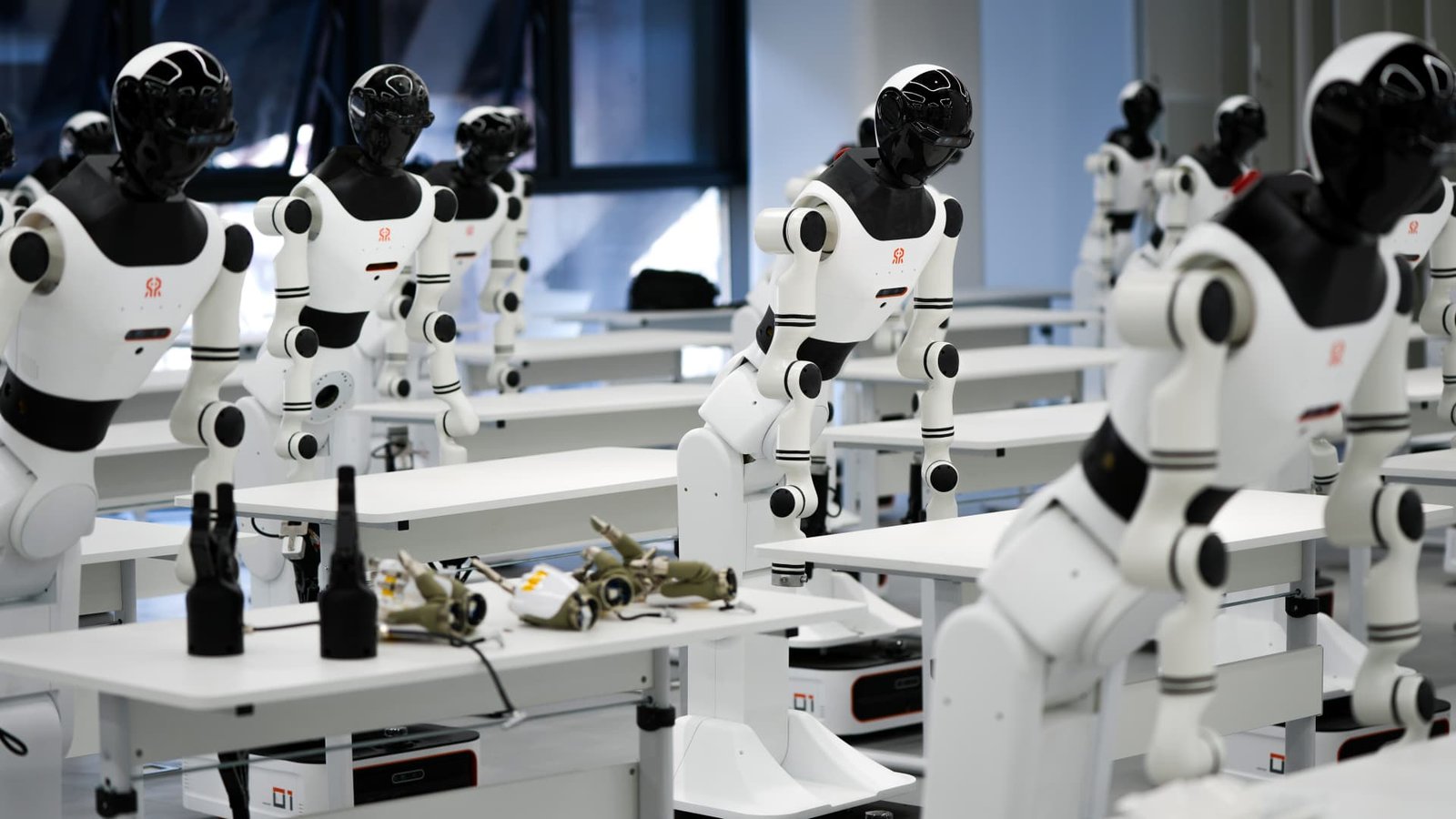
Humanoid industrial robots are gaining attention as Rivian Automotive CEO RJ Scaringe previews a future where these machines work alongside human employees. Speaking during the launch of the Rivian R2 electric vehicle, Scaringe expressed his vision of a collaborative environment where workers and robots interact seamlessly. His recent venture, Mind Robotics, aimed at creating humanoid robots, has already secured over $1 billion in funding and plans to unveil its first product within the year.
Mind Robotics, which Scaringe leads as executive chair and acting CEO, is designed to operate independently from Rivian, contrary to Tesla’s integrated approach by Elon Musk. Scaringe emphasized that while both companies share a focus on autonomy, their products and operational strategies are distinct. He acknowledged the significant potential for industrial labor collaboration, citing a multitrillion-dollar market opportunity.
Despite the optimistic outlook for humanoid robots, Scaringe noted that their introduction would not entirely replace human workers. He predicts robots will take on simpler tasks, allowing humans to focus on more complex and skilled responsibilities. Scaringe highlighted an existing labor gap in manufacturing as a driving force behind the need for robots.
As enthusiasm for AI and robotics grows, Scaringe believes their development is advancing rapidly, urging society to understand the pace at which these technologies will arrive in workplaces.
Why this story matters: The integration of humanoid robots in industrial settings could dramatically change labor dynamics and productivity.
Key takeaway: Humanoid robots are expected to augment human capabilities rather than replace them, with a focus on collaboration.
Opposing viewpoint: Critics raise concerns about potential job displacement as robots assume roles traditionally held by humans.