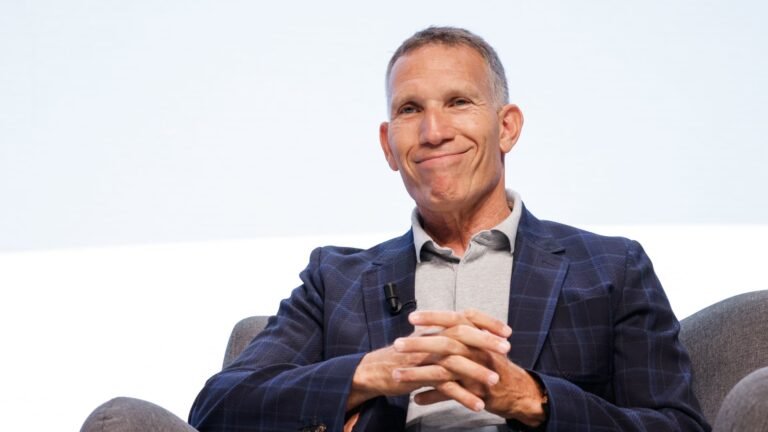



Shares of SoFi experienced a significant drop of over 15% on Wednesday following the company’s decision to maintain its full-year outlook. CEO Anthony Noto clarified that this choice was based on a reassessment of macroeconomic conditions rather than a decline in the company’s performance. He noted that the initial outlook was crafted with expectations of at least two rate cuts from the Federal Reserve, a scenario that has since changed, leading to the assumption that no cuts will occur.
In its recent financial report, SoFi announced earnings of 12 cents per share and net revenue of $1.09 billion, aligning closely with market expectations. Despite what Noto described as a “remarkable” quarter, which marked the company’s 18th consecutive achievement of its "Rule of 40" target, investors were primarily concerned with the unchanged outlook. Noto emphasized that the decision to refrain from raising guidance was a cautious response to uncertainties surrounding interest rates and geopolitical events, rather than an indication of any business downturn.
Even with the more conservative stance, SoFi has shown robust growth metrics, including a 41% increase in revenue and 31% margins, while also increasing its member base and product adoption. The firm also reported generating over $1 billion in cash revenue for the second quarter in a row. “We’re really hitting on all cylinders,” Noto affirmed.
Why this story matters: The decisions of financial companies like SoFi can influence market perceptions and investor behavior, especially amid economic uncertainties.
Key takeaway: SoFi’s steady performance contrasts with the cautious outlook due to shifting macroeconomic signals, highlighting the impact of external conditions on financial forecasts.
Opposing viewpoint: Some analysts may argue that maintaining an unchanged outlook, even amidst strong growth, could signify a lack of confidence in long-term market stability.