

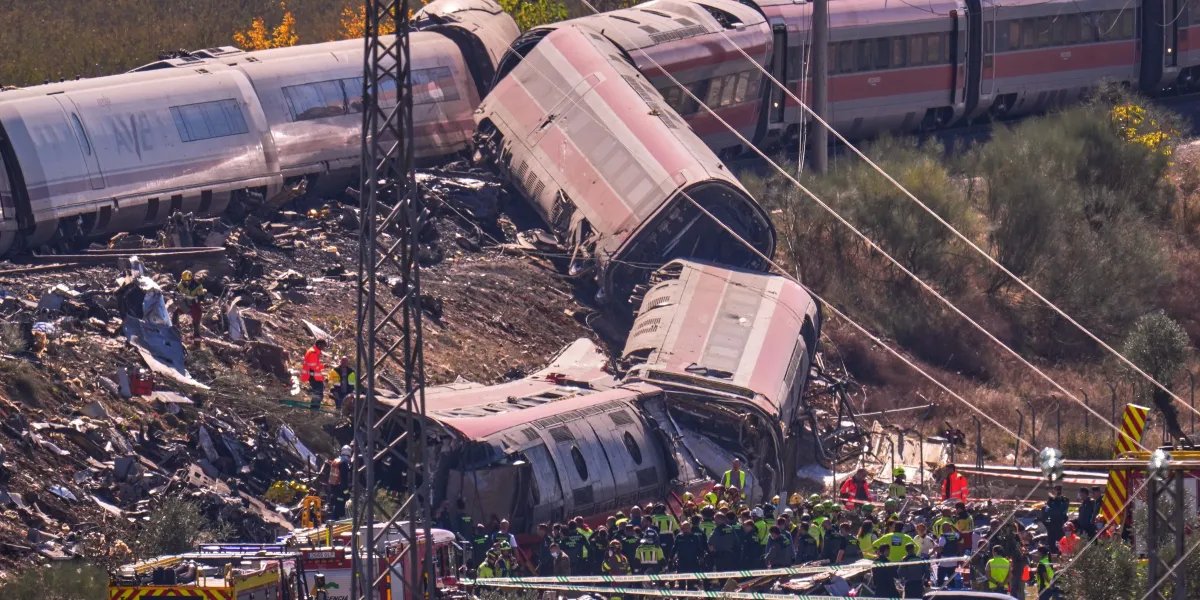
A tragic collision on the Madrid-Seville high-speed rail line in Toledo province resulted in the deaths of 69 people, prompting an investigation into the causes. Spain’s transport minister, Óscar Puente, attributed much of the blame to the poor judgment of a traffic controller who allowed one train to restart at full speed while another was still stationary. This incident follows a deadly crash in January that killed 46 people and raised serious concerns about rail safety in Spain.
Currently, police continue to search the wreckage, with regional authorities warning that the death toll might still rise. Prime Minister Pedro Sánchez expressed disappointment, stating it is unacceptable for a country with a robust high-speed railway to have two serious accidents in such a short time frame.
The crash occurred after a critical communication system, LZB, failed, leaving traffic controllers to manually monitor train positions across a 39-mile stretch. There were only 16 controllers available at the time, leading to concerns from railway unions about deteriorating working conditions, with claims that controllers are overburdened with too many trains to supervise safely.
Unions argue that the accountability for the accident should not rest solely on the controller, emphasizing the need for infrastructure improvements and better staffing in light of increased rail traffic due to the liberalization of Spain’s high-speed rail services. Meanwhile, the government has stated it is in the process of replacing the outdated LZB system, which has frequently malfunctioned.
Investigation efforts continue as families search for answers and hope to locate unaccounted-for loved ones, with over 39 individuals currently hospitalized from the incident.
Why this story matters
- Highlights ongoing safety concerns in Spain’s high-speed rail system.
Key takeaway
- The tragic accident raises questions about the adequacy of staffing and infrastructure amid increasing rail traffic.
Opposing viewpoint
- Unions emphasize that blaming individual workers overlooks systemic issues affecting rail safety.