


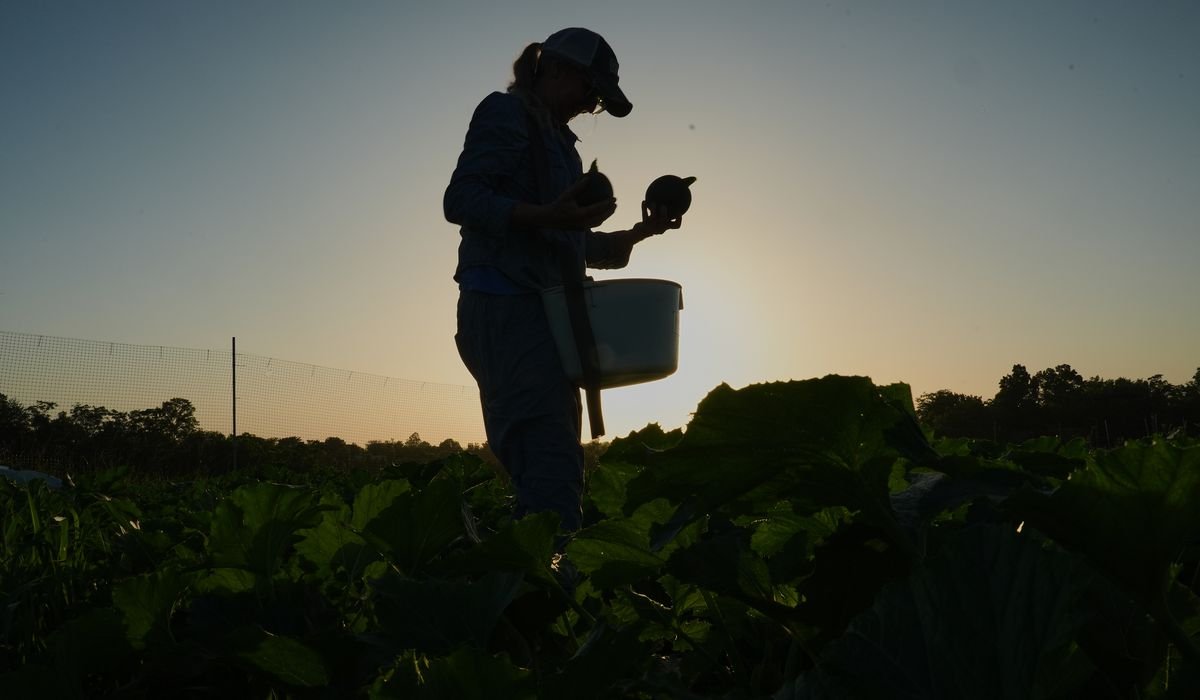
In Brooksville, Kentucky, Annie Woods, a farmer managing a 50-acre plot, is adapting to the increasing frequency and intensity of extreme heat due to climate change. As she harvests squash and zucchini in the waning daylight, Woods emphasizes that heat waves are becoming a norm rather than an anomaly, reflecting a broader climate crisis that also brings flooding and drought, which threaten crop viability and farming schedules.
Recent heat domes have particularly affected specialty farmers like Woods, who cultivate fruits and vegetables. Unlike larger commercial farms typically growing staple crops, specialty farmers often lack access to the same safety nets when disasters strike. To combat extreme temperatures, farmers are adjusting schedules to work during cooler parts of the day and implementing strategies designed to shield crops and themselves from excessive heat.
Woods and other farmers are concerned about how rising temperatures can diminish crop quality and shorten harvests. For instance, fruit growers in Iowa like Paul Rasch are reacting by adjusting their harvesting timelines to avoid dangerous heat. He notes that unusual weather patterns are altering the agricultural landscape, leading to a diversification of crops to mitigate losses.
Despite these adaptations, farmers face challenges accessing necessary crop insurance. Specialized insurance policies do not always provide adequate coverage for small-scale farmers, leaving them vulnerable to the risks posed by unpredictable weather.
Woods operates a community-supported agriculture (CSA) program, offering flexibility to navigate crop failures. She and her peers are learning to be proactive about resilience in the face of escalating climate-related challenges.
Why this story matters:
- Highlights the impact of climate change on specialty farmers’ livelihoods and crop production.
Key takeaway:
- Farmers are forced to adapt their practices and schedules to cope with increasing heatwaves while facing challenges in accessing adequate insurance.
Opposing viewpoint:
- Some argue that larger agricultural practices, such as industrial farming, might manage such risks better than small-scale or specialty farming.