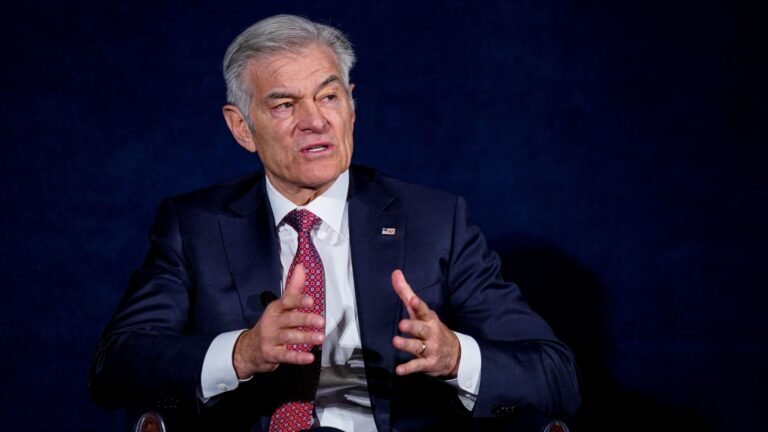




Federal Reserve Governor Stephen Miran provided insights during the Invest in America Forum on October 15, 2025, regarding recent monetary policy developments at the Federal Reserve. The central bank’s decision to lower the federal funds rate by a quarter percentage point was accompanied by significant dissent, with three voting members expressing opposing views—marking the highest level of division within the Fed in over six years. Chicago Fed President Austan Goolsbee and Kansas City Fed President Jeffrey Schmid opposed the reduction, favoring a stable rate. Miran, the most recent appointee to the Fed, has repeatedly advocated for a more aggressive half-point cut, making this his third consecutive dissent.
In addition to these dissents, four nonvoting participants at the meeting expressed softer opposition, highlighting internal divisions within the organization. Fed policymakers project that interest rates may stabilize at their current level of 3.75 percent to 4 percent by the end of the year. According to Kay Haigh from Goldman Sachs Asset Management, the dissenting votes reflect a stronger hawkish stance within the Fed. He also noted that while future cuts remain a possibility, economic conditions, particularly in the labor market, must improve significantly.
Christopher Rupkey, chief economist at FWDBONDS, suggested that these dissenting votes do not necessarily predict future rate adjustments. He emphasized that upcoming changes in Fed leadership, including a potential new chair in 2026, could influence forthcoming policy decisions, hinting at possible rate cuts as part of the economic agenda.
Why this story matters: The level of dissent within the Federal Reserve indicates differing perspectives on economic strategy and its implications for monetary policy.
Key takeaway: Internal divisions highlight the complexities and uncertainties surrounding interest rate decisions as the economy faces multiple challenges.
Opposing viewpoint: Some economists believe that despite current dissents, a shift toward rate reductions is likely due to broader economic pressures anticipated in the near future.