


The demand for electricity driven by the AI boom is pushing global infrastructure to its limits, compelling companies to consider unconventional solutions such as floating data centers powered by ocean waves. However, some are looking even further—beyond Earth, to the Moon.
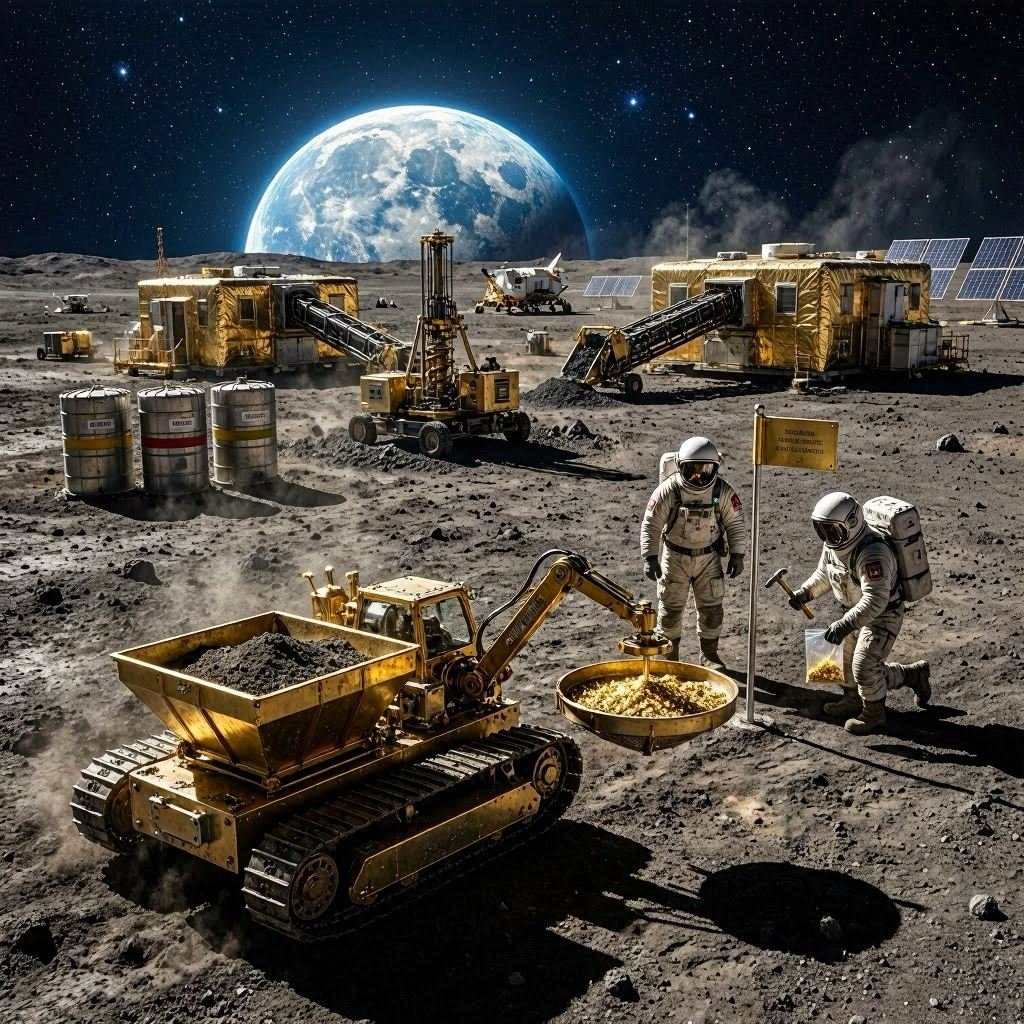
One of the most significant aspirations tied to lunar exploration is the mining of helium-3, a rare isotope believed to be abundant on the Moon. This isotope has the potential to fuel advanced fusion reactors, offering a clean energy solution with minimal radioactive waste. Estimates suggest the Moon may harbor up to one billion kilograms of helium-3, potentially providing energy for centuries. If mined successfully, helium-3 could yield trillions of dollars in value.
Before large-scale mining operations can emerge, essential infrastructure must be established. NASA has taken a pivotal step by awarding Intuitive Machines a Near Space Network contract valued at $4.8 billion to facilitate communication for future lunar missions. Power generation remains a priority, with companies like Astrobotic developing systems such as LunaGrid and vertical solar arrays to ensure continuous energy supply during the Moon’s long nights.
Transportation systems must also be set up to transport goods between Earth and the Moon, with estimates indicating that lunar infrastructure startups secured around $1.9 billion in funding in 2025. Furthermore, researchers are investigating the use of lunar regolith as a building material, which may minimize costs associated with transporting materials from Earth.
The lunar economy is poised for significant growth, with projections suggesting it could generate revenues of up to $127 billion by 2050. As technology advances and energy needs escalate, expanding infrastructure beyond our planet appears increasingly viable.
Why this story matters: The potential for lunar infrastructure could revolutionize energy solutions on Earth.
Key takeaway: Establishing the Moon’s infrastructure is crucial for future sustainable economic activities.
Opposing viewpoint: Critics argue that the focus on lunar mining may distract from pressing energy and infrastructure needs on Earth.