


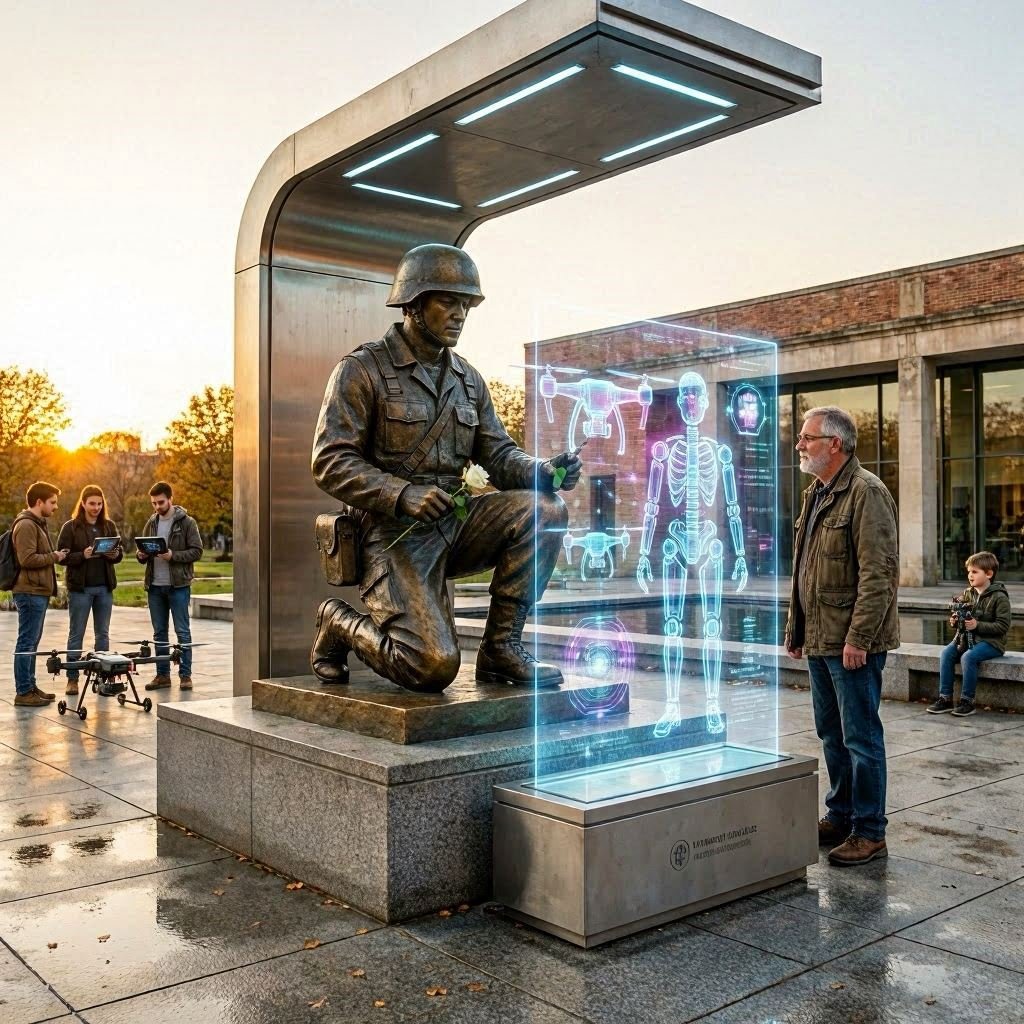
This Memorial Day, Americans will commemorate those who have served in the military with ceremonies, parades, and flag placements at gravesites. While these traditions celebrate sacrifice, they also highlight the evolving nature of warfare, particularly in relation to technological advancements.
Historically, conflict has accelerated technological progress. Innovations such as radar during World War II and GPS, which began as a military project, underscore this relationship. Currently, artificial intelligence (AI) is becoming increasingly vital to military operations. It assists analysts in processing vast amounts of intelligence data, enhances target recognition, and helps decision-makers operate efficiently.
Recent conflicts, such as the situation in Ukraine, showcase how autonomous systems, like drones, are shifting military strategies. These low-cost technologies have proven effective against expensive equipment, compelling military planners to reconsider longstanding principles of warfare. Today, intelligence—particularly the speed of information collection and processing—is becoming a dominant factor in military power.
The application of AI on the battlefield enables rapid identification of threats and quicker decision-making, giving an edge to forces that can adapt swiftly. Companies are investing heavily in AI-driven military technologies, aimed at enhancing, rather than replacing, human operators.
The emphasis is now on integrating machine capabilities with human judgment to manage the overwhelming flow of information. This shift redefines military strength, moving beyond sheer numbers or budgets to prioritize intelligence capabilities.
As Memorial Day serves to honor the past, it also invites contemplation on the future of warfare. The influence of military innovation will extend beyond the battlefield, shaping civilian life in unforeseen ways.
Why this story matters:
- The integration of AI in military operations is transforming traditional warfare.
Key takeaway:
- Future military advantage will depend more on intelligence systems and AI technologies than on troop numbers or budgets.
Opposing viewpoint:
- Some argue that reliance on technology may dehumanize warfare and lead to ethical concerns over machine-led combat decisions.