



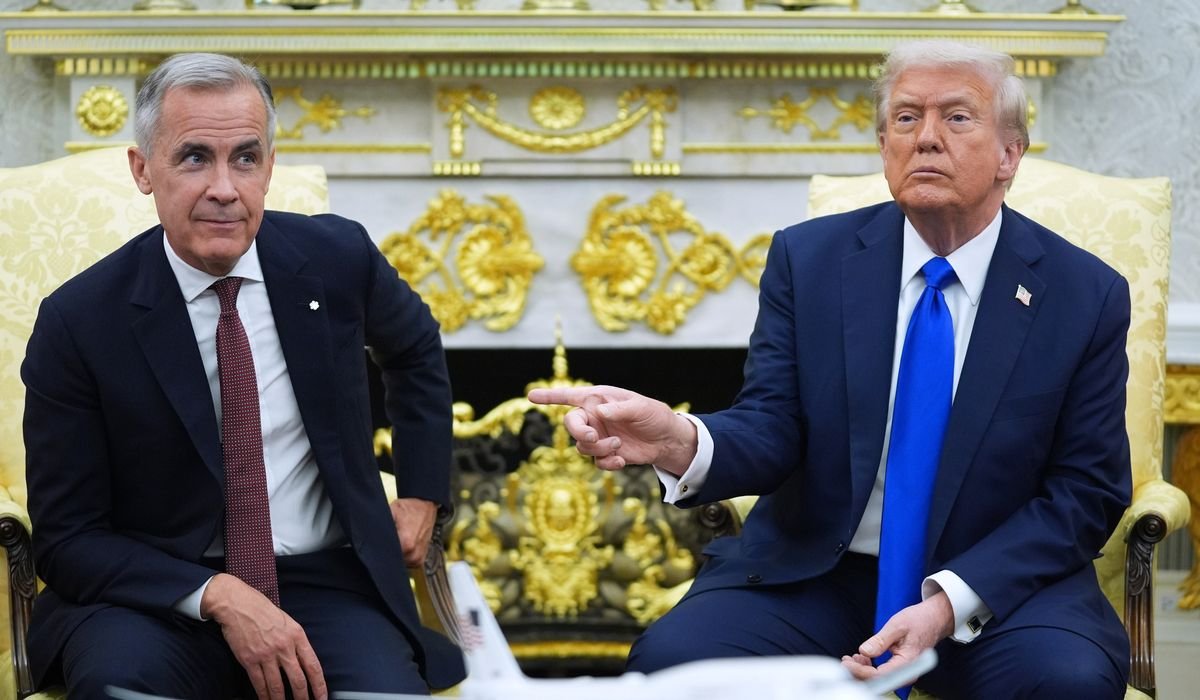
President Trump addressed the collapse of U.S.-Canada trade negotiations in a social media post, expressing commitment to terms that Canada rejected. He criticized Canada’s stance, alleging that the country wishes to enjoy the benefits of statehood without the responsibilities, and highlighted long-standing tariffs on U.S. agricultural products.
In response to the failed talks, the United States imposed a 50% tariff on approximately $20 billion worth of Canadian imports. U.S. Trade Representative Jamieson Greer noted that no new discussions were planned, emphasizing protection for American workers and supply chains. Canada’s Prime Minister Mark Carney announced that Canada would retaliate with equivalent tariffs on U.S. goods starting September 8, targeting steel, dairy, appliances, and other sectors.
Carney argued that U.S. negotiators introduced last-minute shifts, including restrictions on Canada’s ability to form independent trade agreements and changes to proposed auto tariffs. He stated these actions were unacceptable and blindsided Canadian officials.
The trade war, which has escalated since Trump took office, has seen both nations impose various tariffs, including the existing 25% tariffs on steel and aluminum. The new tariffs will significantly affect a wide range of consumer products, further straining the economic relationship between the two countries.
In 2022, the U.S. and Canada exchanged roughly $880 billion in goods and services, with Canada heavily reliant on U.S. markets for its exports. As the dispute continues, analysts predict deeper tensions that could affect North American trade policy and economic stability.
- Why this story matters: Escalating trade tensions may affect economic relations between the U.S. and Canada, both significant trading partners.
- Key takeaway: The imposition of retaliatory tariffs underscores the fragility of cross-border trade negotiations and highlights diverging national interests.
- Opposing viewpoint: Some may argue that aggressive tariffs and trade restrictions can protect domestic industries and workers, despite potential negative impacts on international relations.