


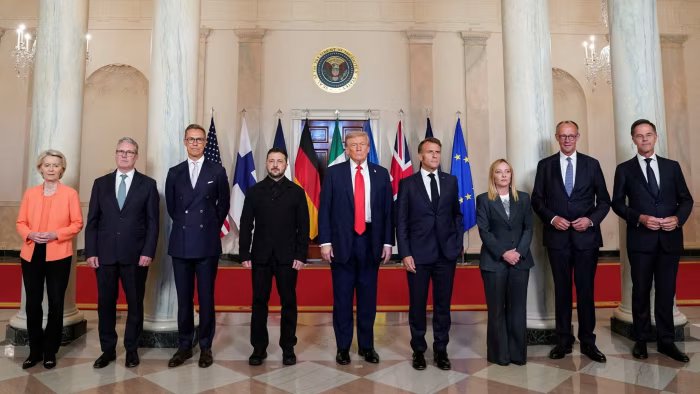
Relations between Europe and the United States have soured significantly following the Trump administration’s release of its new national security strategy (NSS). This strategy, described as openly hostile towards the European Union, has led to increased pressure on Ukraine to accept terms unfavorable to its interests in the ongoing conflict with Russia. European leaders have generally adopted a cautious approach in response, striving for dialogue and persuasion with the U.S. administration.
Experts have observed that Europe’s strategy may be insufficient to manage Trump’s unpredictable foreign policy. Nathalie Tocci, director of Italy’s Institute for International Affairs, noted that European leaders have repeatedly attempted engagement with Trump, raising concerns over the future of transatlantic relations. She described the situation as increasingly alarming, suggestive of a widening rift between European capitals and Washington.
The NSS’s characterization of the EU as a potential threat to U.S. interests has drawn sharp criticism from former officials, including former EU foreign policy chief Josep Borrell, who condemned it as a “declaration of political war” on Europe. Analysts have highlighted the potential risks posed by the document’s focus on “strategic stabilization” with Russia, which could undermine the security of both NATO and non-NATO European nations. Furthermore, apprehension exists over American interference in European politics, particularly concerning the support for anti-EU movements.
As tensions escalate, the prospect of a significant fallout between the U.S. and Europe looms while the conflict in Ukraine remains a critical flashpoint in the evolving landscape of international relations.
Why this story matters
- The potential for a significant rupture in U.S.-European relations could have lasting implications for global security dynamics.
Key takeaway
- The Trump administration’s NSS reflects a shift in U.S. policy that challenges the EU and could destabilize European security frameworks.
Opposing viewpoint
- Some analysts argue the NSS is inconsistent and may lack strategic depth, making it more a statement of values than a concrete policy directive.