
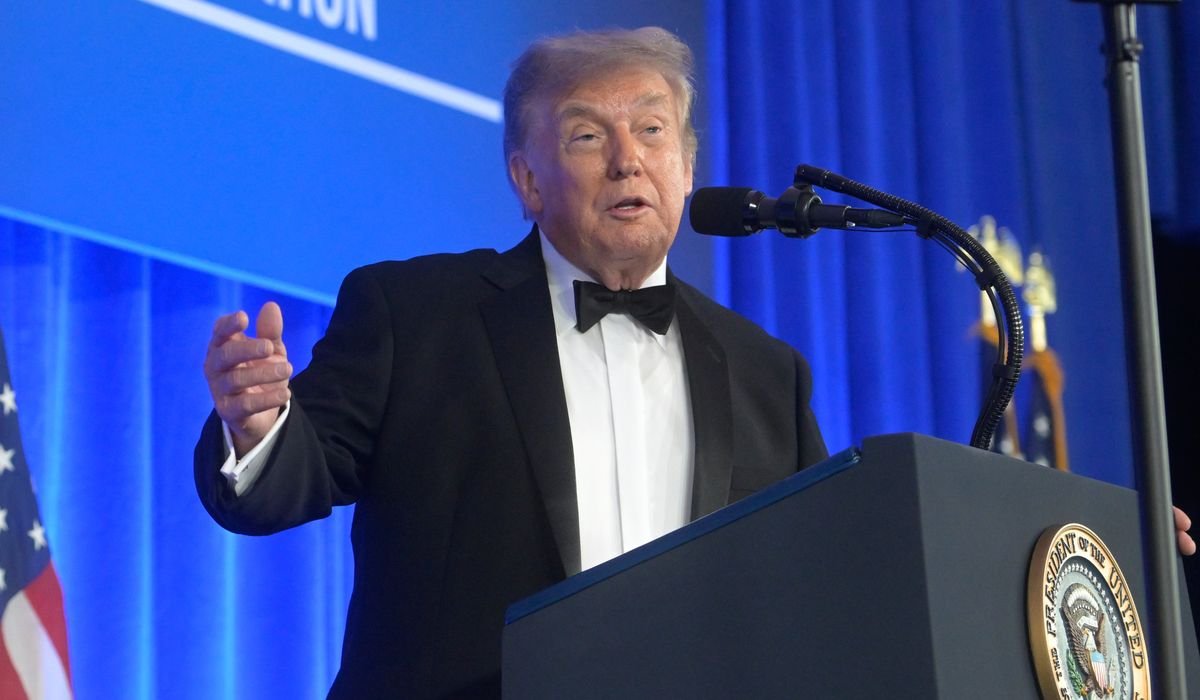
President Donald Trump made a notable return to the White House Correspondents’ Association dinner at the Waldorf Astoria in Washington, D.C., delivering a speech that lasted over an hour. He acknowledged both supportive and critical journalists in the audience, which included members he had previously targeted during his presidency. Trump indicated that he had toned down his remarks for the evening, having discarded the more provocative sections of his planned speech, originally intended for an earlier date that had been disrupted by an act of violence.
Throughout his speech, Trump mixed humor with barbs aimed at various public figures, including celebrities and political opponents. His comments ranged from playful to controversial, receiving mixed reactions from the audience. The event also featured the presentation of journalism awards, many of which recognized reporting that had challenged Trump’s administration.
This year’s dinner differed markedly from previous events, marked by heightened security and fewer attendees due to safety concerns. WHCA president Weijia Jiang opened with a statement reaffirming the importance of a free press and the resilience of the press corps in the face of adversity. Despite the celebratory atmosphere, some attendees voiced concerns about the ethics of journalists mingling with politicians, suggesting that such events could undermine public trust in media.
In a bid for reconciliation, Trump concluded his remarks by expressing respect for the journalism profession, asserting their interdependence.
Why this story matters:
- It highlights ongoing tensions between the Trump administration and the press, reflecting broader issues of media freedom.
Key takeaway:
- Trump’s speech exemplified a complex relationship with the media, alternating between humor and criticism.
Opposing viewpoint:
- Critics argue that events like the WHCA dinner compromise journalistic integrity by fostering an illusion of camaraderie between journalists and their subjects.