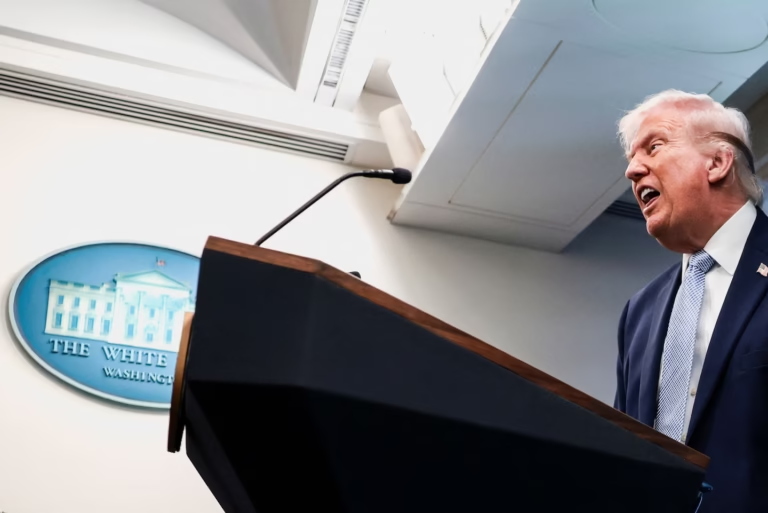


Donald Trump has issued a stern warning to Canada, threatening to impose 100% tariffs on Canadian goods if the nation finalizes a trade deal with China. This announcement follows comments made by Mark Carney, the Governor of the Bank of England, suggesting the United States is straining the global trade order. Trump’s remarks, shared on Truth Social, accused Canada of attempting to become a “drop off port” for Chinese products aimed at the U.S. market.
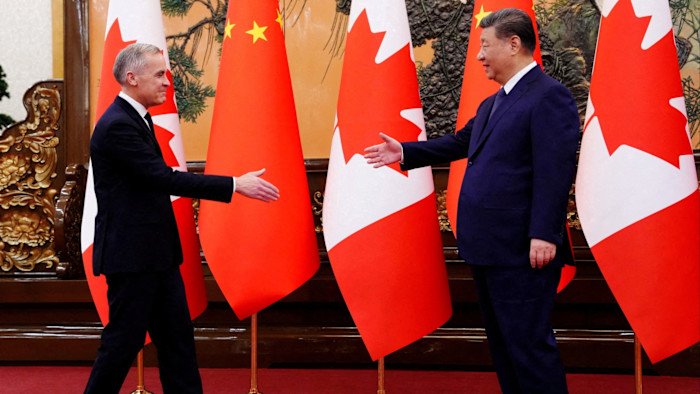
The escalation comes after months of relative calm in trade relations. Recently, Canada and China moved to lower trade barriers on electric vehicles and canola oil, coinciding with Carney’s diplomatic visit to Beijing, intended to diversify Canada’s trade partnerships. Trump, initially supportive of Carney’s engagement with China, dramatically shifted his stance. He stated, “If Canada makes a deal with China, it will immediately be hit with a 100% tariff against all Canadian goods and products.”
This rhetoric follows a previous period where Trump threatened significant tariffs against Europe regarding Greenland but later receded from those threats. Historically, the president’s approach has involved making bold tariff threats, which are often rolled back in favor of exemptions or suspensions.
Tensions peaked during the World Economic Forum in Davos, where Carney’s speech highlighted a fracture in the rules-based international order, implicitly rebuking Trump’s unpredictable policies. In response, Trump emphasized the importance of U.S.-Canada relations, adding: “Canada lives because of the United States.”
Canada’s decision to allow imports of Chinese electric vehicles, despite the U.S.’s tariff stance, could complicate ongoing negotiations related to the USMCA trade agreement. Amidst this backdrop, voices from both sides urge for de-escalation of the rising trade tensions.
Why this story matters
- The potential tariffs could significantly impact trade relations between the U.S. and Canada.
Key takeaway
- Trump’s trade rhetoric demonstrates a stark reversal from cooperation to confrontation, threatening economic ties with Canada.
Opposing viewpoint
- Numerous officials argue that Canada’s engagement with China is necessary for diversifying trade and ensuring economic stability.