


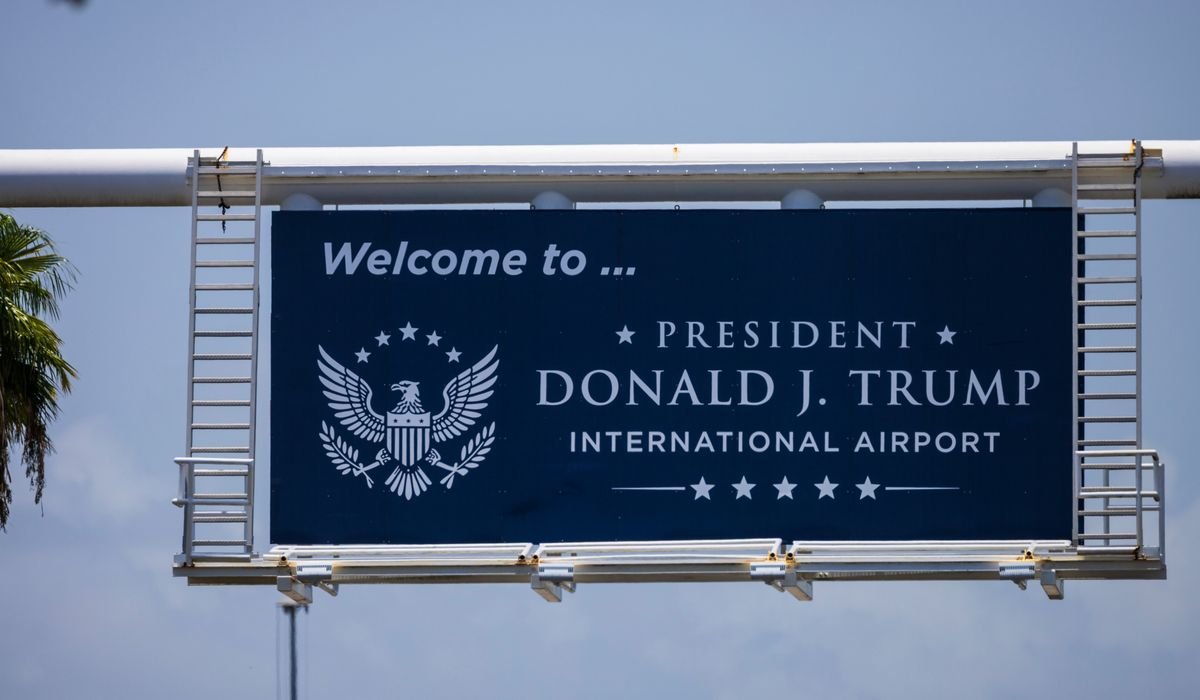
United Airlines recently clarified its policy regarding ticket changes after some customers expressed dissatisfaction with the renaming of Palm Beach International Airport to President Donald J. Trump International Airport. The airline stated that while customers can change their travel plans free of charge for several reasons, discontent over an airport’s name or its three-letter code is not a valid reason for such changes.
This clarification followed an internal memo, which suggested that customer service representatives could offer alternative airports, such as Fort Lauderdale or Miami International Airport, if passengers were unhappy with the name change. However, the memo was later deemed “poorly worded and not accurate” by United Airlines.
The name change became official on July 9, in accordance with Florida state law, although the airport’s three-letter code will remain PBI until August 18, after which it will shift to DJT. Airport officials acknowledged the mixed reactions to the name change and expressed gratitude for continued passenger support during this transition, emphasizing their commitment to ensuring a positive travel experience.
In this context, United Airlines aims to maintain clarity regarding its policies while navigating the sensitivities surrounding the airport’s new nomenclature.
Why this story matters: Understanding airline policies in relation to customer dissatisfaction highlights the complexities of branding and service in the travel industry.
Key takeaway: Customers cannot change their flights free of charge due to displeasure with an airport’s name.
Opposing viewpoint: Some passengers may feel that airlines should accommodate changes when significant factors like airport names may affect their travel experience.