


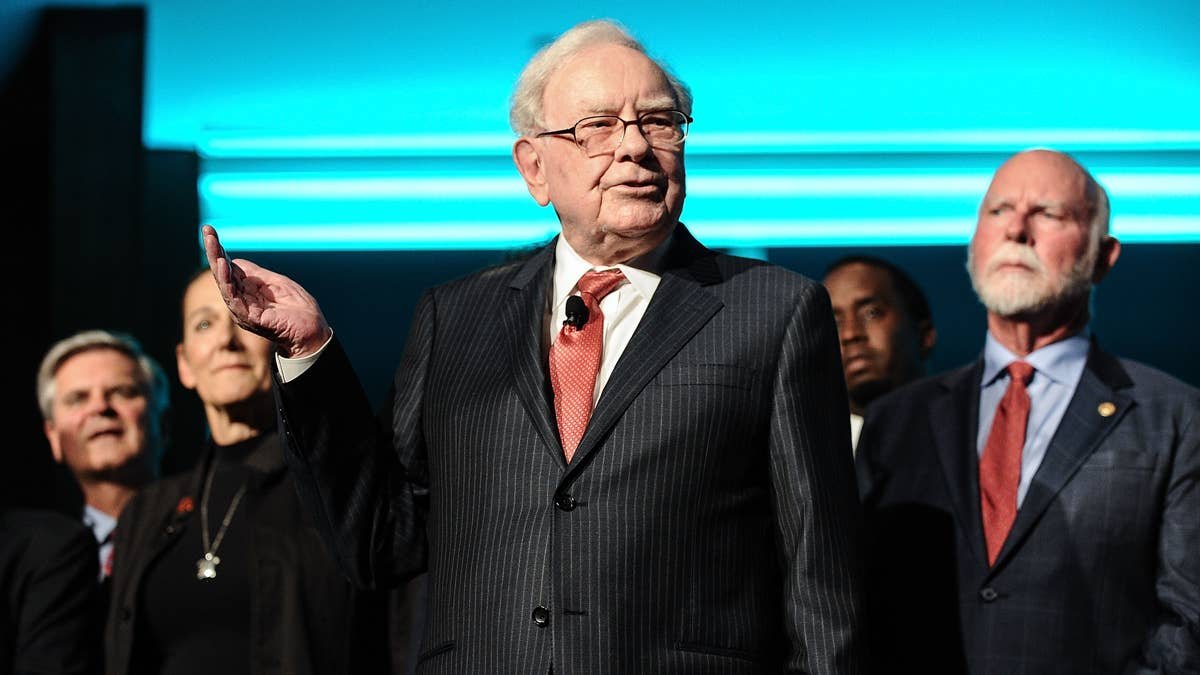
Warren Buffett, the CEO of Berkshire Hathaway, is renowned for his exceptional investment track record over the past six decades. Despite this success, his advice for everyday investors has consistently prioritized low-cost index funds over individual stock selection.
During Buffett’s tenure, Berkshire Hathaway achieved a compound annual return of approximately 19.7%, propelling an initial $500 investment in 1965 to nearly $24 million by the end of 2025. Nevertheless, Buffett has never expected individual investors to replicate such extraordinary returns. Instead, he has emphasized the merits of investing in low-cost index funds, explicitly highlighting Vanguard’s S&P 500 ETF in correspondence dating back to 2013, when he allocated a significant portion of his wife’s inheritance to this fund.
The Vanguard S&P 500 ETF is characterized by its minimal expense ratio of just 0.03%, making it a cost-effective option compared to most actively managed funds. This strategy has proven effective as the ETF has amassed over $950 billion in assets, granting investors access to 500 of America’s largest corporations. Furthermore, the fund’s structure means larger companies have a greater influence on performance, with technology currently dominating the index.
Buffett’s successor, Greg Abel, has maintained a concentrated investment approach, focusing on a few high-performing stocks. This strategy has recently included increasing Berkshire’s stake in Alphabet significantly. Despite these investment choices, Buffett continues to caution against market volatility, with Berkshire being a net seller of stocks in 14 of the last 15 quarters.
Ultimately, Buffett’s foundational advice remains unchanged: investing in a low-cost index fund is a prudent strategy for the average investor, emphasizing patience and passive management over speculation.
Why this story matters
- Buffett’s investing philosophy influences countless individual investors.
Key takeaway
- Low-cost index funds, like Vanguard’s S&P 500 ETF, are recommended for stable long-term growth.
Opposing viewpoint
- Critics argue that concentrating investments in a few stocks can be risky and may lead to significant losses.