



Advancements in artificial intelligence (AI) have highlighted the significance of addressing physical constraints that accompany technological progress. The current AI landscape has evolved beyond developing sophisticated AI models; the focus now lies on overcoming various bottlenecks that hinder performance.
Initially, the AI industry faced limitations in computing power, which companies like Advanced Micro Devices (AMD) tackled through the production of graphics processing units (GPUs) essential for training and running AI models. As demand surged, AMD benefited significantly, reinforcing its pivotal role in the evolution of AI technology.
However, as the industry overcame its first bottleneck, new challenges emerged, particularly in data delivery speeds. Traditional memory systems struggled to keep pace, leading to a surge in demand for high-bandwidth memory (HBM). Micron Technology capitalized on this need, establishing itself as a key player and reporting sold-out production capacity through 2025.
As AI systems became increasingly complex, the focus shifted to the challenges posed by the interconnectivity of numerous processors. Optical networking technologies gained emphasis, allowing for faster data transmission and enabling companies like Coherent to become vital suppliers.
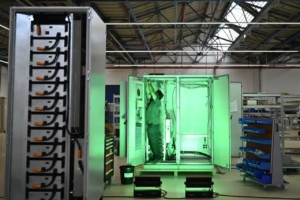
Currently, the AI sector grapples with another significant constraint—power consumption. Advanced AI server racks are already drawing considerable electricity, with future designs expected to require up to one megawatt. This presents substantial engineering challenges, as current systems were not designed to accommodate such massive power needs, which can generate excessive heat and necessitate heavier electrical components.
Investors are now encouraged to identify companies poised to address these power challenges, as they could emerge as the next leaders in the evolving AI landscape.
Why this story matters
- The AI industry’s growth hinges on overcoming physical constraints, opening investment opportunities.
Key takeaway
- Companies that solve evolving bottlenecks in AI infrastructure may be positioned for significant financial success.
Opposing viewpoint
- Some believe that focusing on AI model development remains paramount over addressing infrastructure issues.