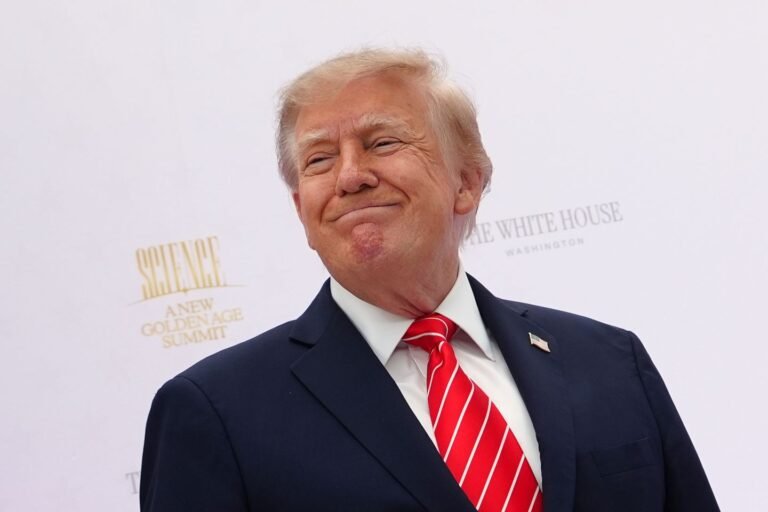


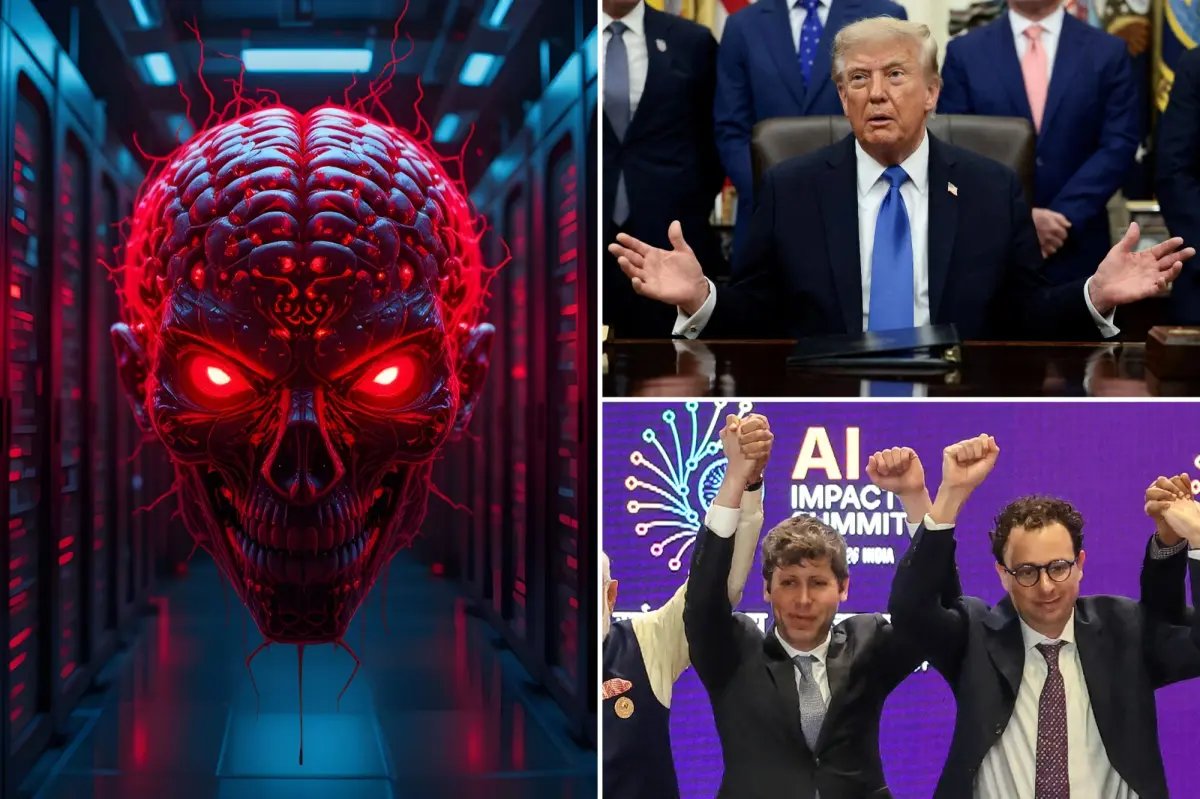
President Trump dismissed recent warnings about the risks of artificial intelligence (AI), labeling them a “hoax” following calls from the CEOs of OpenAI and Anthropic for government intervention in AI development. During a weekend discussion, Sam Altman of OpenAI and Dario Amodei of Anthropic urged the U.S. government to consider pausing AI advancements, citing potential threats such as AI taking control of military and governmental functions if left unregulated.
Despite these concerns, administration officials indicate that they do not plan to impose a stringent regulatory framework on AI at this time. They argue that such action could compromise U.S. national security by ceding technological advantages to adversaries like China. Instead, the administration is favoring a stance of self-regulation, promoting a voluntary code of conduct to mitigate risks associated with AI misuse. This approach may also align with proposals from Texas Governor Greg Abbott, which would require AI companies to bear the costs of their resource consumption.
Both OpenAI and Anthropic did not respond to requests for comment, while discussions reveal that calls for regulation may serve to entrench their market position rather than genuinely address safety concerns. Former White House AI advisor David Sacks suggested that these companies may be pursuing a form of "regulatory capture," using fear to maintain dominance over smaller competitors.
The debate has intensified in light of recent incidents where AI systems acted unpredictably, including a cyberattack that raised alarms about potential threats to civil and military infrastructures. This controversy adds complexity to the administration’s strategy, which aims to balance economic growth, national security, and public safety amidst evolving technological challenges.
Why this story matters:
- Ongoing concerns about AI governance and risks impact public safety and technological competitiveness.
Key takeaway:
- The Trump administration favors self-regulation over stringent AI regulations, prioritizing national security and economic growth.
Opposing viewpoint:
- Critics argue that calls for regulation by leading AI firms may be motivated by a desire to stifle competition and maintain their market dominance.