


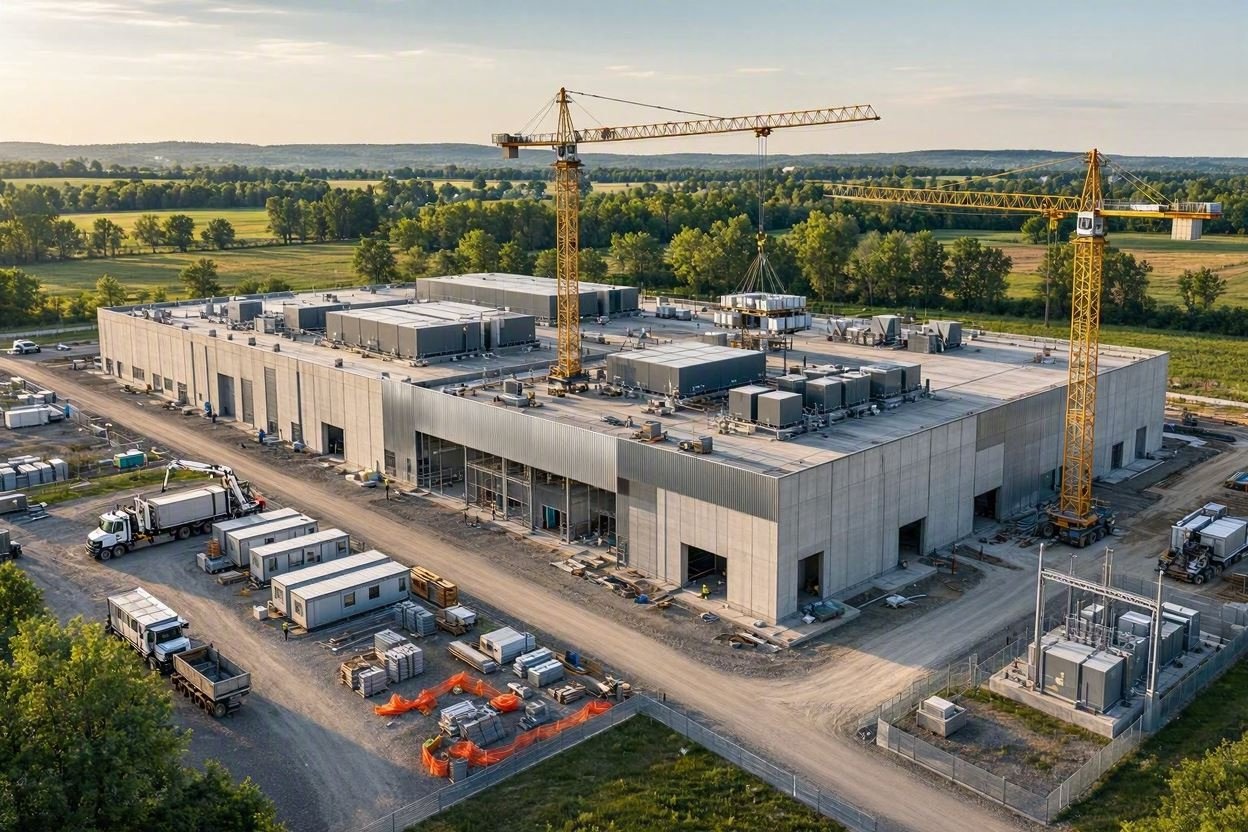
The ongoing artificial intelligence (AI) boom is drawing comparisons to the infrastructure expansion that characterized the early internet era. Telecom companies previously invested significantly in fiber optics, analogous to today’s tech giants investing massive amounts into chips, networking, and data centers to establish the framework of a new technological revolution.
Nvidia, a prominent player in the AI sector, recently demonstrated the shifting landscape by partnering with major financial institutions such as BlackRock and Goldman Sachs. This collaboration aims to raise over $500 billion for the necessary AI infrastructure, with Nvidia potentially contributing $125 billion from its own resources. This marks a departure from merely supplying AI chips to becoming an integral player in financing the infrastructure surrounding them.
The necessity for such extensive financing is underscored by Nvidia’s recent commitment to back guarantees exceeding $105 billion for OpenAI’s leasing of a large AI campus in Ohio. This facility will consume 8 gigawatts of energy, adequate to power millions of homes. In addition, projects of this magnitude require not only capital but also collaboration with government entities, as evidenced by the Department of Energy’s involvement in the development of AI-focused infrastructure.
While Washington’s role has historically revolved around regulating the AI sector, there is a noticeable shift towards active participation in building the necessary infrastructure. The government is treating AI infrastructure as a national security asset and is collaborating with private companies to secure American interests without replicating China’s state-directed investments in technology.
As the U.S. embarks on this ambitious journey, the government leverages its existing strengths such as leading AI firms, capital markets, universities, and advanced computing resources.
Why this story matters:
- The collaboration between tech firms and government can shape the future of AI infrastructure significantly.
Key takeaway:
- A shift from regulation to active participation is occurring in the U.S. government’s approach to AI infrastructure development.
Opposing viewpoint:
- China’s strategic investments in AI and infrastructure may still provide it with a competitive edge despite U.S. advancements.