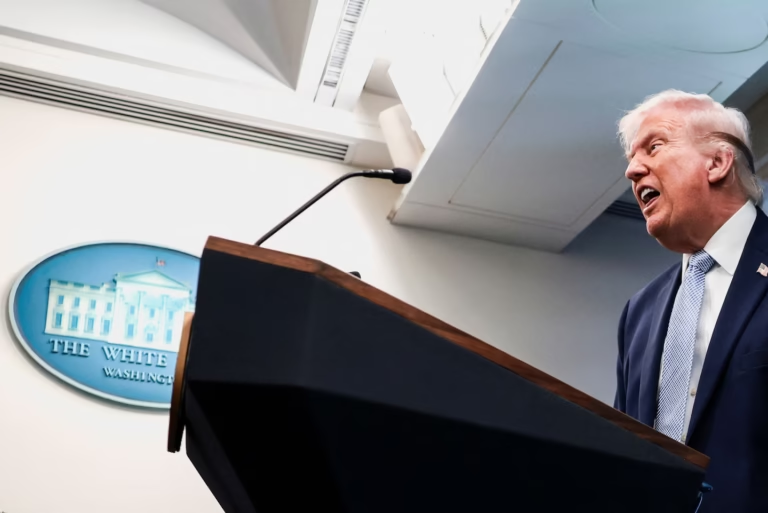


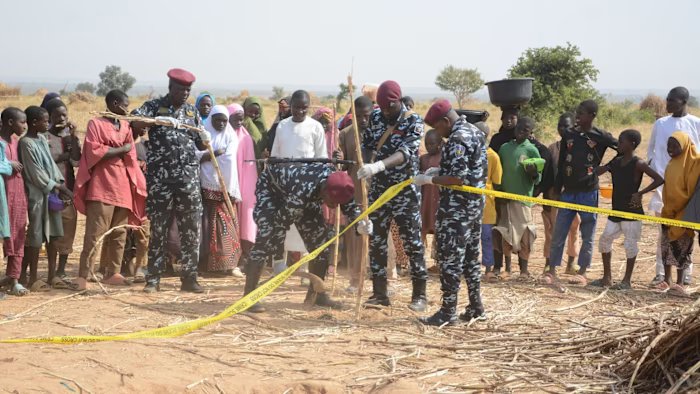
On Christmas Day, residents of Jabo, a predominantly Muslim village in Sokoto State, Nigeria, reported witnessing an unidentified object resembling an aircraft flying overhead, followed by a loud explosion and a fireball. Local accounts indicated that initial fears were unfounded, as the projectiles reportedly landed in uninhabited areas and caused no injuries. This incident was linked to airstrikes carried out by the US military targeting alleged ISIS camps in the region, as stated by President Donald Trump, who described the strike as a significant action against terrorism.
Major General Samaila Uba, the spokesperson for the Nigerian military, confirmed that the strikes were conducted in collaboration with the US, based on credible intelligence. He stated that the operation aimed to thwart the infiltration of foreign ISIS militants into Nigeria—particularly from neighboring countries facing instability. According to the Nigerian government, precision munitions were deployed from naval platforms in the Gulf of Guinea, targeting terrorist enclaves in the Bauni forest area.
Despite official reassurances about the strikes, some local analysts expressed skepticism regarding the choice of Sokoto State as a target, pointing out that the area has been relatively insulated from militant violence compared to regions like Borno and Niger. This skepticism is compounded by the fact that many residents believe the incident there was unrelated to any terrorist activity.
Amid concerns over operational collaboration between the US and Nigeria, opposition figures have called for more transparency regarding the legal and strategic justifications for the airstrikes, questioning the extent of Nigerian involvement in their planning and execution.
Why this story matters:
- The airstrikes highlight the complex dynamics of international military cooperation in addressing terrorism in Nigeria.
Key takeaway:
- While the US and Nigerian officials assert the importance of the strikes against ISIS, local sentiments reveal skepticism about the necessity and effectiveness of targeting Sokoto.
Opposing viewpoint:
- Critics argue that targeting a predominantly Muslim area raises questions about the true nature and execution of the operation.