



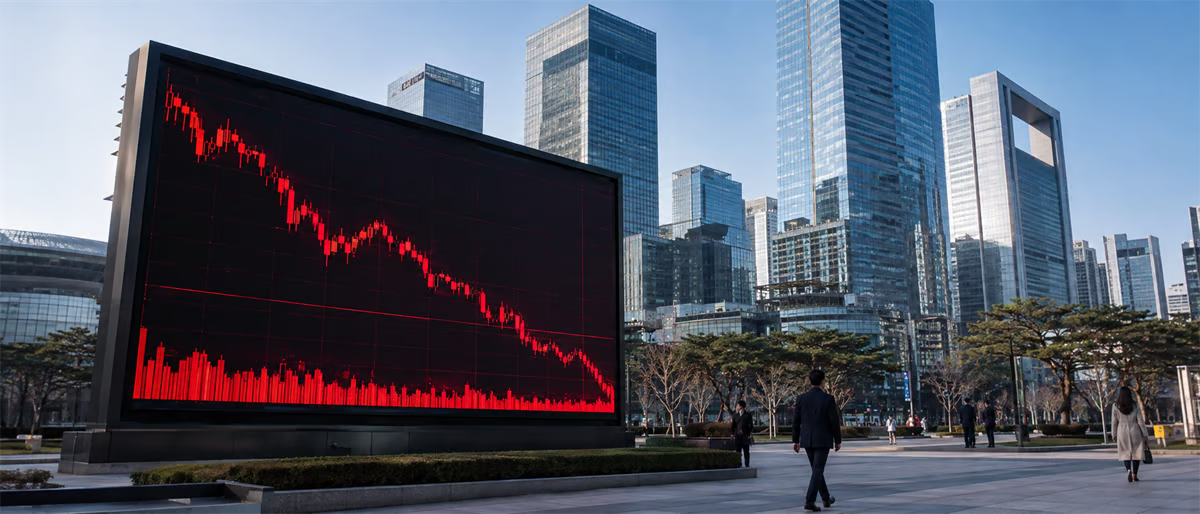
Trading halts on South Korea’s stock exchange and flash crashes in Japanese market indices have increasingly triggered anxiety in global technology sectors. These sudden market movements often lead automated trading algorithms to rapidly sell off equities closely linked to the electronics hardware supply chain. However, such sell-offs typically do not reflect a genuine decline in demand for key technologies like artificial intelligence (AI) and advanced semiconductors.
The underlying causes of these abrupt market shocks are often related to localized financial dynamics and currency fluctuations. In South Korea, a significant amount of retail margin debt tied to memory chip companies makes the local market particularly sensitive to shifts in short-term sentiment. Similarly, adjustments in Japan’s central bank interest rates can lead to abrupt exits from the Japanese yen carry trade, compelling overseas investors to liquidate positions to manage currency loans.
For investors, such panics are more indicative of temporary liquidity issues than of fundamental corporate weaknesses. Notably, ongoing investments in hyperscaler data centers are unaffected by fluctuations in foreign exchange rates or margin calls. When capital exits these turbulent regions, it often seeks the security of companies with strong balance sheets, creating strategic opportunities for investors.
The manufacturing of advanced computing components is heavily concentrated in Asia, linking regional financial stress to global asset prices. This interdependence provides window opportunities for informed investors to acquire shares in leading companies that may temporarily drop in value. Fundamentals for corporations in sectors such as AI and quantum computing remain robust despite these market noise events, and understanding these dynamics can lead to advantageous investment positions.
Why this story matters: Understanding the interplay between local market dynamics and global tech valuations enables more informed investment decisions.
Key takeaway: Temporary market panics driven by localized financial issues can create unique buying opportunities in high-quality technology companies.
Opposing viewpoint: Some investors may argue that reliance on market volatility creates significant risk, as not all dips result in recoveries, and external factors could lead to long-term declines.