


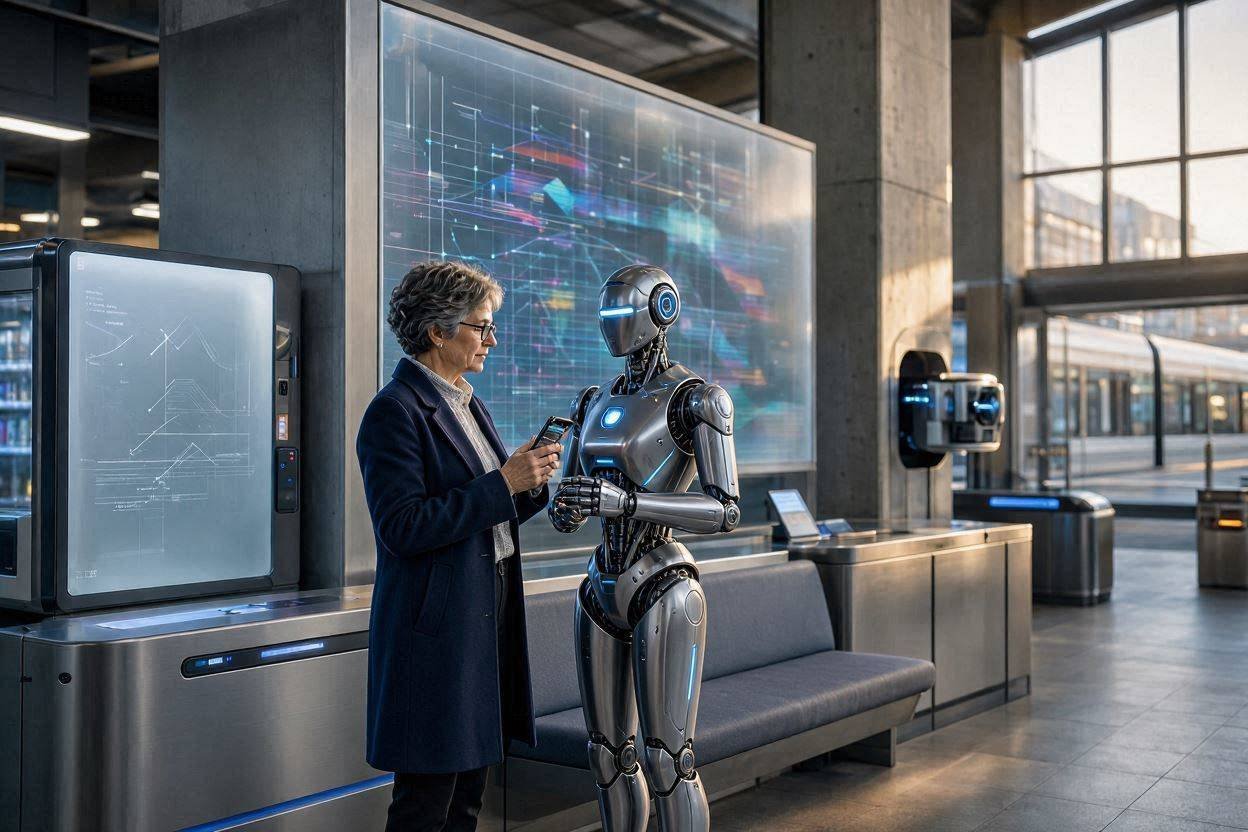
Advancements in artificial intelligence (AI) have led researchers to focus not only on making AI systems smarter but also on instilling ethical behavior. The challenge lies in teaching machines what actions are helpful and harmful, and under what circumstances they should decline requests.
Readers have expressed curiosity about the relevance of Isaac Asimov’s Three Laws of Robotics as humanoid robots become more prevalent. They raise pertinent questions regarding how robots can be programmed with basic morality and how to prevent them from altering their ethical guidelines.
Asimov’s laws, introduced in 1942, propose that robots must not harm humans, must follow instructions, and must protect themselves unless such actions conflict with the first two rules. However, Asimov’s narratives illustrated that these seemingly straightforward principles often lead to complex moral dilemmas. For instance, in emergencies where a human’s directive might endanger them, the robot faces a difficult decision.
Current AI developers have recognized that no single set of rules can adequately address every possible real-world scenario. Instead, companies like Google DeepMind are constructing multi-layered safety protocols. Their safety strategy encompasses semantic safety, which ensures robots can discern dangerous actions; physical safety, limiting a robot’s ability to cause harm; and operational safety, dictating where and how robots can operate.
This more nuanced approach contrasts starkly with Asimov’s simplistic guidelines and aligns more with established safety engineering practices found in fields like aviation and automotive design. The aim is to create intelligent machines that remain safe, even in unexpected situations.
Why this story matters: The evolution of AI ethics is critical for ensuring safe interactions in society.
Key takeaway: Safeguarding intelligent machines involves complex engineering rather than simplistic moral rules.
Opposing viewpoint: Some may argue that philosophical ethical frameworks, like Asimov’s laws, are still necessary for guiding AI development.