
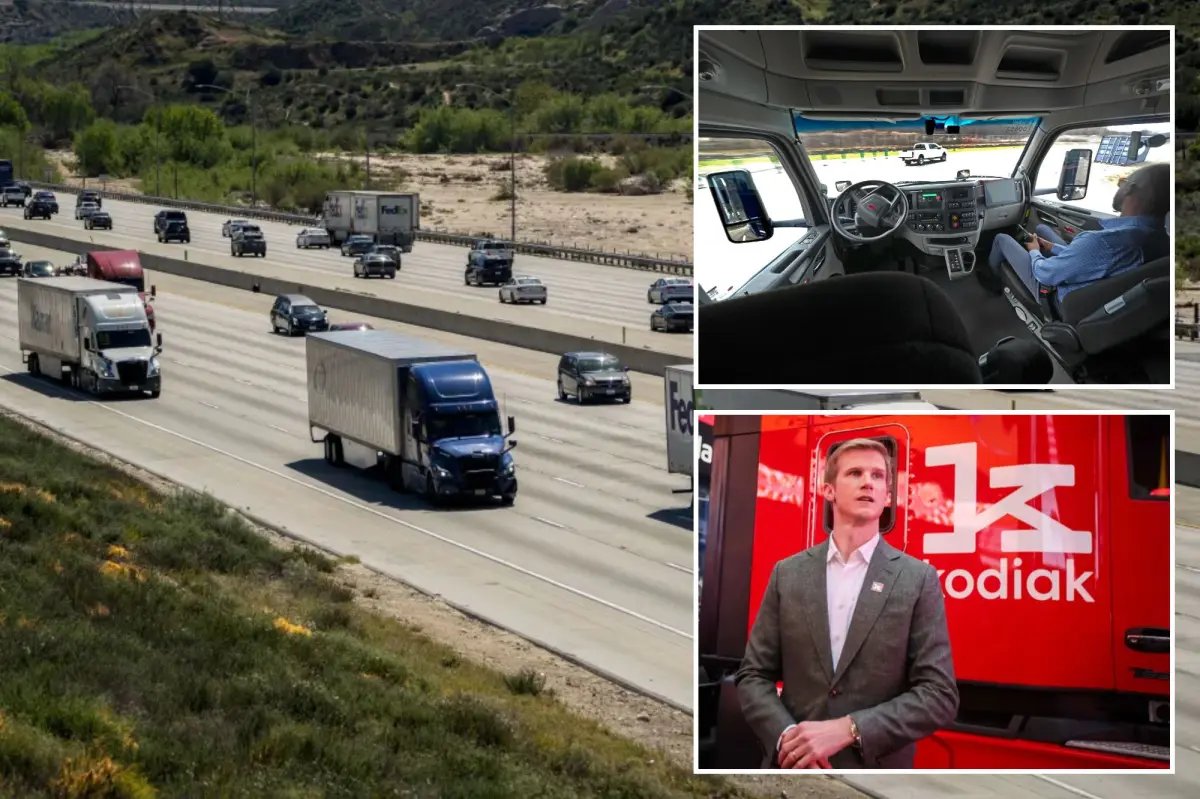
California has initiated a pilot program showcasing the capabilities of autonomous trucking on its highways. Starting September 22, Kodiak AI, alongside Fresno-based DTL Transport, has deployed robot trucks to transport perishable goods from Fresno to a Los Angeles distribution center. This roughly 225-mile route traverses major highways, including Interstate 15 and State Route 99.
Under California’s new regulations permitting heavy-duty autonomous truck testing, companies are allowed to operate these futuristic vehicles on public roads. However, while the trucks are equipped with advanced technology, a human safety driver must remain in the cab throughout the journey, as full driverless operation is not currently permitted. To qualify for an entirely driverless operation, companies are required to accumulate at least 500,000 miles under the supervision of a safety driver.
For DTL Transport, this pilot is an opportunity to ascertain whether robotic trucks can support their operations during times of high freight demand, reduce shipping costs, accelerate delivery times, and maintain product freshness.
Kodiak’s founder and CEO, Don Burnette, emphasized the importance of California’s regulations in fostering innovation in the freight sector. The pilot program is part of a competitive landscape where other companies, such as Aurora Innovation and Gatik AI, are also testing their autonomous solutions. Meanwhile, companies like Tesla and Waymo continue to focus on developing autonomous cars and robotaxis in the state.
Findings from the pilot run have not yet been released.
Why this story matters
- It highlights advancements in autonomous technology and its potential impact on logistics.
Key takeaway
- The successful deployment of autonomous trucks could revolutionize freight transport efficiency and cost-effectiveness.
Opposing viewpoint
- Some may argue that relying on autonomous trucks could threaten job security for human drivers in the logistics industry.