


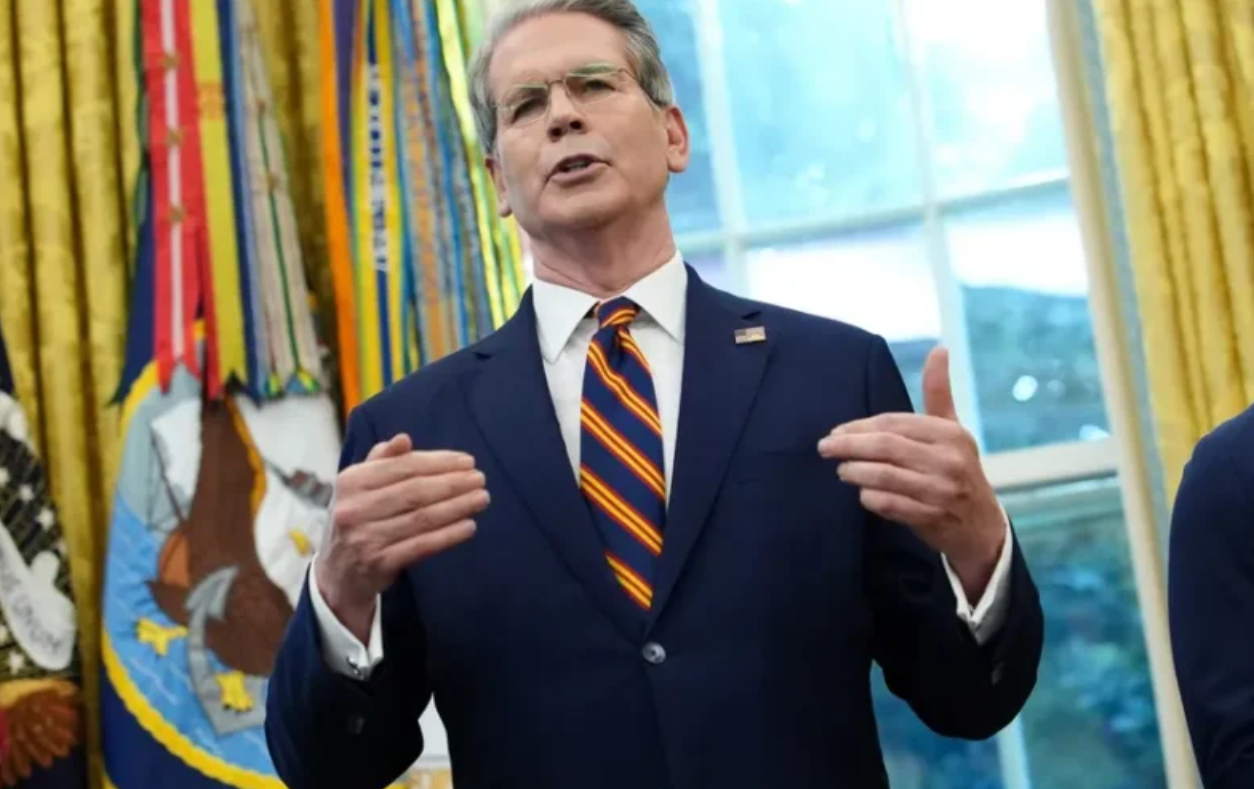
Scott Bessent, during recent appearances on Fox Business, reiterated that the gold reserves at Fort Knox are valued at over $1 trillion, affirming that they are "present and accounted for." However, he also pointed out that these gold holdings are irrelevant to the current value of the U.S. dollar, as the country now operates on a fiat currency system where gold does not back the dollar’s worth.
This commentary has generated significant discussion, especially given that Bessent’s emphasis on the gold reserves was unexpected if they truly hold no importance. Critics, such as Peter Schiff, have taken issue with Bessent’s previous mention of redeeming old gold and silver certificates for metal—an assertion Schiff counters with historical facts, noting that redemption was halted decades ago.
Contextual developments around this narrative include France’s recent withdrawal of 129 tons of gold from the New York Federal Reserve, a move that reaffirms European efforts to bolster their own gold reserves. Simultaneously, Canada has established a $25 billion sovereign wealth fund aimed at decreasing its reliance on the U.S. dollar. Additionally, the European Central Bank’s report from June indicates that gold now constitutes 27% of global official reserves, a proportion higher than that of both the dollar and euro individually.
While these events do not signal an imminent return to a gold-backed dollar, the ongoing discussions and movements by central banks suggest a shift in the perception and importance of gold reserves in global monetary policy.
Why this story matters: Ongoing discussions about gold reserves indicate a potential shift in monetary policy and asset valuation globally.
Key takeaway: Despite claims of irrelevance, significant attention remains on gold reserves and their potential influence on currency value.
Opposing viewpoint: Some analysts argue that gold has become largely symbolic, with fiat currency systems dominating modern economies.