



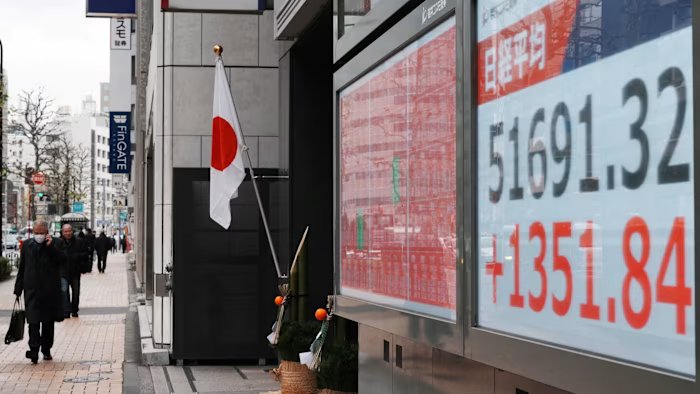
Japan’s financial markets are experiencing a noteworthy transformation, with the Nikkei 225 index surpassing the 54,000 mark for the first time, signaling an all-time high for the country. This milestone is particularly significant for an economy traditionally characterized by stagnation. The current fiscal year is expected to see local companies return a record ¥20 trillion ($127 billion) in dividends to shareholders, reflecting a substantial turnaround from the past.
Since April, the index has surged nearly two-thirds, breaking away from the inconsistent growth patterns familiar since 2012. Positive sentiment surrounding a potential snap election may pave the way for Prime Minister Sanae Takaichi’s ruling coalition to implement an expansionary fiscal strategy, which often benefits stock performance. Additionally, a notable increase in dividends indicates a shift from former practices, where companies tended to hoard cash instead of allocating it for growth or returning it to investors.
Japanese non-financial companies currently hold over ¥110 trillion in reserves, yet dividend payouts have more than doubled in the past decade, with around one-third of earnings returned to shareholders. Governance reforms have contributed to a greater responsiveness to shareholder interests, further augmenting household wealth alongside rising stock values. Japanese households now own approximately 20% of all listed shares.
Nevertheless, questions remain regarding the sustainability of this rally. Growth drivers appear ambiguous, relying heavily on currency valuations rather than strong demand. Despite expectations of only 1.3% real GDP growth by fiscal 2026, the rising dividend income is expected to produce lasting benefits for investors in the stock market.
Why this story matters: The rise in dividends marks a critical shift in Japan’s corporate culture and economic landscape, potentially providing valuable lessons for other economies.
Key takeaway: Increased shareholder payouts and governance reforms are reshaping investment dynamics in Japan, benefiting households’ financial stability.
Opposing viewpoint: Concerns exist regarding the sustainability of this growth, as it lacks solid foundations in actual demand or economic expansion.