



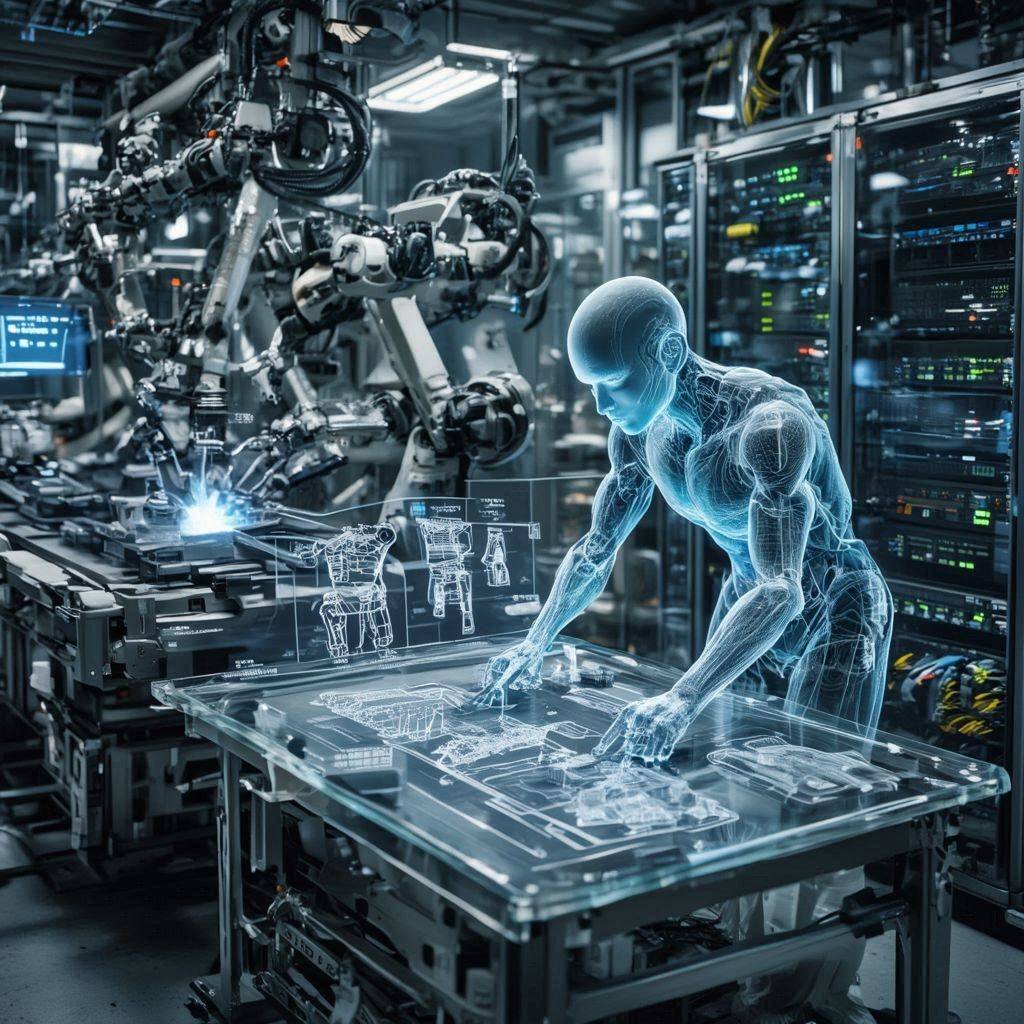
The semiconductor industry is poised for significant growth, with projections indicating it could reach approximately $1.6 trillion by 2030, primarily driven by advancements in computing and data storage. However, a transformative shift is occurring within the industry, as artificial intelligence (AI) begins to play a crucial role not only in driving demand for chips but also in their design.
Chip design, characterized as one of the most challenging engineering tasks, typically involves extensive human effort. Engineers dedicate a considerable portion of their time—up to 70%—to writing and testing design code, performing repetitive tasks that can hinder efficiency. Leading software firms are now harnessing AI to automate these processes. AI systems can design code, validate and test designs, and even troubleshoot issues autonomously.
Cadence, a notable player in the field, reports its AI design tools have contributed to over 1,000 finalized chip designs. Recently, they introduced AI-driven assistance for the physical layout of circuits on silicon, expanding AI’s involvement in chip design. Synopsys is also integrating multiple AI agents across various stages of chip development, enhancing the efficiency of design and testing.
Despite these advancements, current AI capabilities remain limited, necessitating human oversight due to the intricate trade-offs involved in chip design. Challenges such as timing constraints and specific decision-making still require human input. Nonetheless, AI is increasingly streamlining the design process, allowing smaller teams to explore multiple architectures and iterations, thereby shortening development cycles.
Analysts predict a continued upward trajectory in the semiconductor market, with AI chips expected to account for around 30% of total revenue this year. This evolution signifies that gaining a speed advantage in design will become critical in a highly competitive industry.
Why this story matters:
- The integration of AI in chip design is revolutionizing the semiconductor industry, enhancing productivity.
Key takeaway:
- AI’s ability to automate repetitive tasks in chip design is enabling faster development cycles and innovation.
Opposing viewpoint:
- Despite AI advancements, human engineers are still essential for making complex design decisions, indicating AI will complement rather than replace human roles in the industry.