

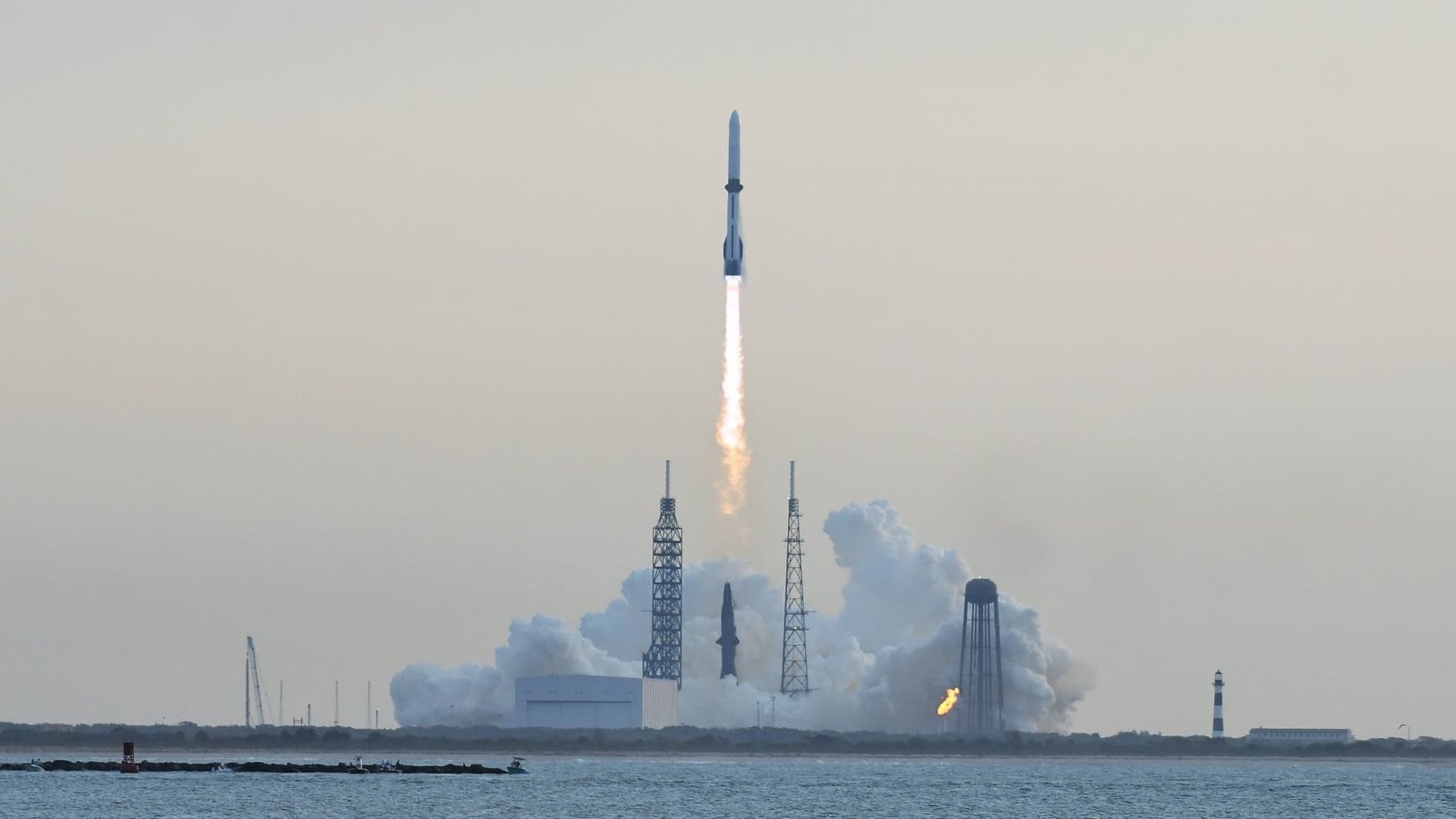
A Blue Origin New Glenn rocket launched from Cape Canaveral Space Force Station on April 19, 2026, carrying the AST SpaceMobile Bluebird 7 satellite. However, the mission encountered complications when the satellite was placed in a lower-than-intended orbit. Following the event, AST SpaceMobile’s stock fell by 8%. This satellite would have marked the eighth in the company’s series aimed at providing low-earth orbit connectivity.
Blue Origin acknowledged the orbital issue and stated that they are currently assessing the situation, committing to provide additional updates. Although the satellite loss is projected to be offset by an insurance policy, the company aims to continue its launch schedule, planning to deploy a satellite every one to two months throughout 2026. AST SpaceMobile expects Bluebird satellites 8, 9, and 10 to be ready for shipment in the coming 30 days.
Analysts expressed mixed views regarding the implications for AST SpaceMobile. William Blair’s Louie DiPalma noted the company gained valuable experience from the launch, which could be beneficial for future missions. Conversely, Clear Street’s Greg Pendy maintained a buy rating on AST stock but reduced his price target, indicating a potential decrease in share performance outlook. UBS analyst Christopher Schoell highlighted the importance of Blue Origin’s success to AST’s growth objectives, suggesting that uncertainty regarding future launches might dampen investor enthusiasm temporarily.
Why this story matters:
- The performance of Blue Origin’s New Glenn rocket is crucial for AST SpaceMobile’s strategic goals and financial stability.
Key takeaway:
- Despite the recent setback, AST SpaceMobile remains committed to its launch schedule and believes in the long-term potential of its satellite deployments.
Opposing viewpoint:
- Some analysts caution that the company’s current trajectory may be affected by reliance on Blue Origin’s launch success, creating uncertainty for investors.