



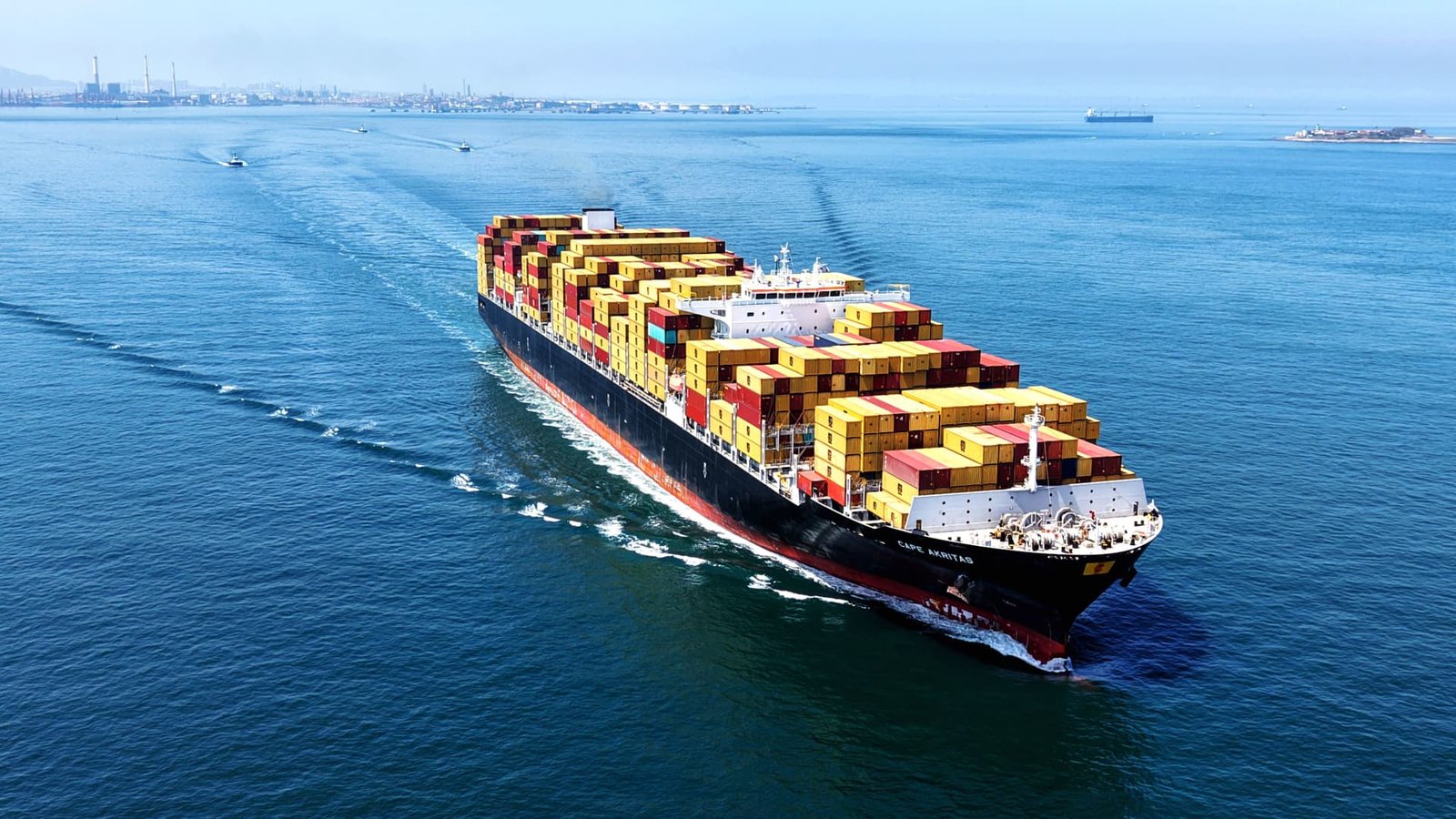
A cargo ship carrying foreign trade containers departed for open waters in Jiaozhou Bay, Qingdao, Shandong, China, amid changing economic conditions. Data from Chinese customs indicated that export growth decelerated in March, impacted by rising commodity and energy prices due to conflicts in the Middle East affecting supply chains. Exports increased by just 2.5% in U.S. dollar terms compared to the same month last year, a significant decline from the 21.8% rise observed in January and February and well below the 8.6% growth projected by analysts.
Notably, shipments to the United States, China’s largest trading partner, fell sharply by 26.5% year on year. In contrast, imports surged by 27.8% in March, marking the best growth in over four years and surpassing expectations of 11.2%. China’s sustained reliance on trade for economic growth persists despite elevated tariffs and geopolitical tensions with the U.S. Last year, net exports constituted roughly one-third of the country’s economy.
Wang Jun, vice minister of customs, highlighted in a recent press briefing that fluctuating global oil prices have created a challenging trade environment. March saw a decline in crude oil imports of nearly 2.8% in volume and 4.4% in dollar value. Liquefied natural gas imports also fell, while rare earth imports surged, and soybean imports increased modestly.
Rising commodity costs are beginning to affect manufacturers’ profit margins, with factory-gate prices experiencing a 0.5% increase for the first time in over three years. Nonetheless, domestic demand pressures have kept consumer price index growth to just 1%. China’s first-quarter GDP report is expected soon, with analysts forecasting a 4.8% increase.
Why this story matters
Key takeaway
Opposing viewpoint