


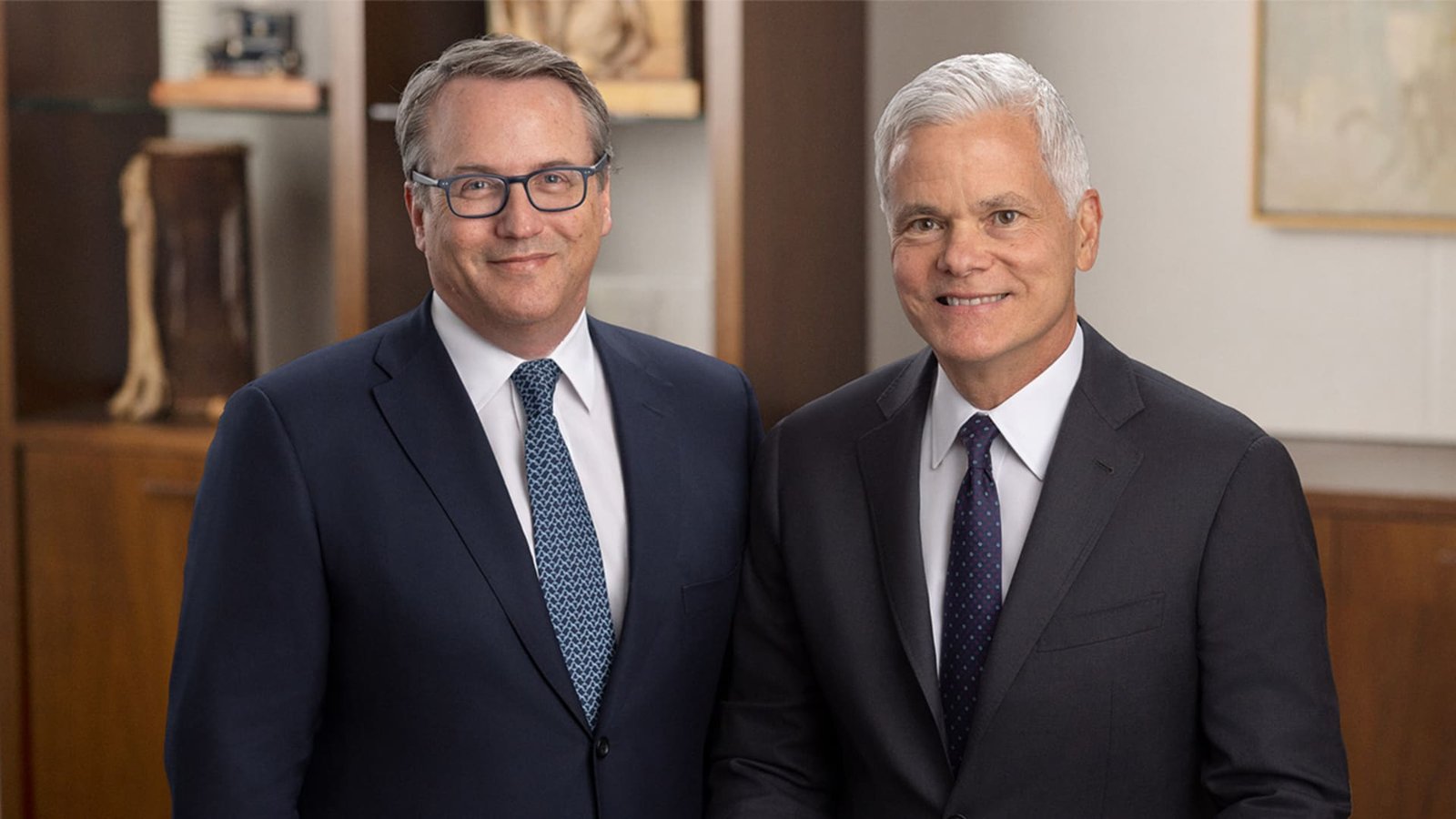
JPMorgan Chase announced the promotion of executives Doug Petno and Troy Rohrbaugh to newly established co-president roles, a significant move within CEO Jamie Dimon’s ongoing succession planning. Effective immediately, Petno and Rohrbaugh, who have been jointly managing the bank’s commercial and investment banking division since early 2024, will lead the firm’s two largest businesses. As part of this restructuring, Petno, 61, assumes sole leadership of the commercial and investment banking division while Rohrbaugh, 56, transitions to the role of CEO of the consumer and community banking division, succeeding Marianne Lake, who has decided to retire.
In a statement, Dimon expressed confidence in their leadership and business acumen, emphasizing their commitment to the bank’s values. This restructuring comes as Dimon, 70, has continued to highlight the board’s readiness for future leadership transitions, with various internal candidates positioned for potential advancement.
Notably, both Petno and Rohrbaugh received substantial one-time bonuses of $30 million, reflecting their elevated status in the succession hierarchy. This bonus is aimed at retaining key talent and ensuring stability in leadership during forthcoming transitions. Each bonus is contingent on the executives remaining with the company for three years and achieving specific performance metrics.
Dimon has led JPMorgan for two decades, guiding it to its status as the largest U.S. bank by assets. While he has often joked about his retirement timeline being five years away, recent remarks suggest his departure may be drawing closer.
Why this story matters:
- The promotions signify a strategic shift in JPMorgan Chase’s leadership, impacting its operational direction.
Key takeaway:
- Internal succession planning at JPMorgan highlights the importance of cultivating leadership from within.
Opposing viewpoint:
- Some may argue that reliance on internal candidates limits fresh perspectives that external leadership could provide.