

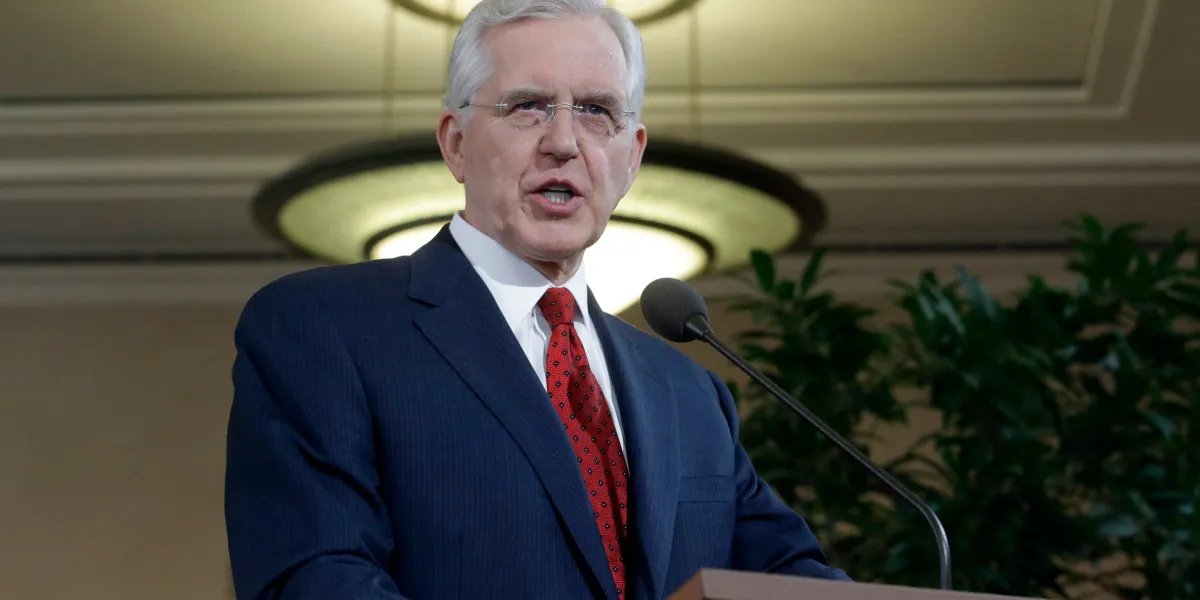
D. Todd Christofferson, a prominent leader of The Church of Jesus Christ of Latter-day Saints, expressed concerns over the surge in gambling influenced by online prediction markets and sports betting during the church’s general conference. He cautioned that increasing gambling activities, particularly among youths, are detracting from their education and personal relationships, as easy access through smartphones enables betting from anywhere.
Christofferson emphasized the church’s fundamental belief that gambling is morally wrong, stating it thrives on the desire to gain something without effort. His remarks place the church at odds with the stance taken by President Donald Trump’s administration, which has argued that platforms like Kalshi and Polymarket should not be classified as gambling. This position is particularly significant given Utah’s history of strict anti-gambling laws, reinforced by a recent federal ruling allowing state officials to regulate prediction markets under these laws.
Despite the prevailing opposition to gambling among religious groups, including condemnations from the United Methodist Church and the Southern Baptist Convention, Christofferson’s statements resonate within the church’s long-standing view of gambling as a gateway to selfishness and addiction. The state’s strict regulations reflect this cultural ethos, maintaining a gambling-free environment for over a century, with no casinos or lottery systems in place.
As the church navigates evolving political landscapes under the leadership of President Dallin Oaks, it has strategically engaged in various political issues while learning from past controversies.
Why this story matters:
- Highlights the growing concern over youth gambling in the digital age.
Key takeaway:
- The church maintains a firm stance against gambling, framing it as a moral issue.
Opposing viewpoint:
- The current administration argues that prediction markets do not fall under gambling regulations, suggesting a more permissive approach.