



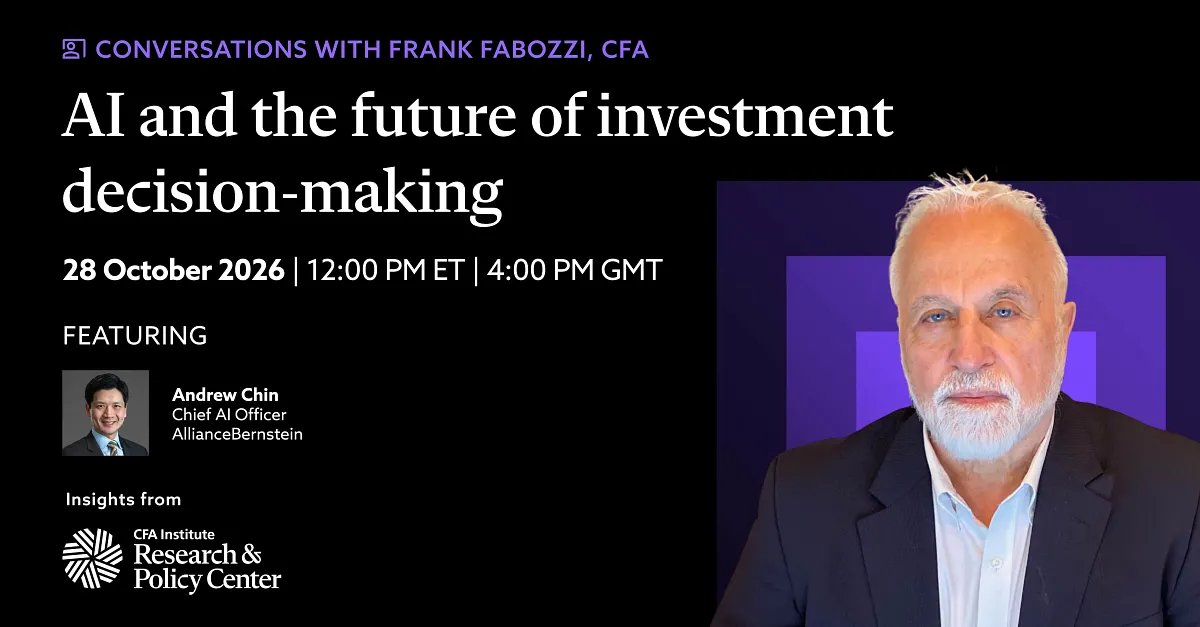
Investment organizations are increasingly exploring how artificial intelligence (AI) can enhance decision-making while maintaining accountability and governance. In a recent discussion, Andrew Chin, Chief Artificial Intelligence Officer and former Chief Risk Officer at AllianceBernstein, provided insights on the transformative impact of AI in institutional asset management.
Chin emphasized that successful integration of AI involves more than merely adopting new technologies. It necessitates a comprehensive strategy that encompasses strong governance and recognizes the collaboration between human expertise and machine intelligence. He asserted that AI should serve as institutional infrastructure, advocating for enterprise-wide platforms that deliver greater value than fragmented applications.
Key points of discussion included the role of governance in fostering innovation, with risk management principles playing a pivotal role in facilitating responsible AI deployment. Chin also highlighted the necessity of defining accountability and ownership in decision-making processes that involve AI, to prevent issues such as convergence and automation bias—where reliance on uniform models and data can lead to suboptimal outcomes.
Additionally, the conversation revolved around the evolving duties of portfolio managers, who are shifting from mere data aggregation to a more nuanced role involving intelligence curation and oversight. AI is viewed as a tool to navigate uncertainty by enabling scenario framing and stress testing of investment portfolios.
Why this story matters:
- Understanding AI’s role can help organizations navigate the complex landscape of asset management effectively.
Key takeaway:
- A robust strategy that merges human judgment with AI capabilities is crucial for optimum decision-making in investment.
Opposing viewpoint:
- Critics may argue that reliance on AI could overshadow human intuition and judgment, leading to errors in complex decision-making situations.