


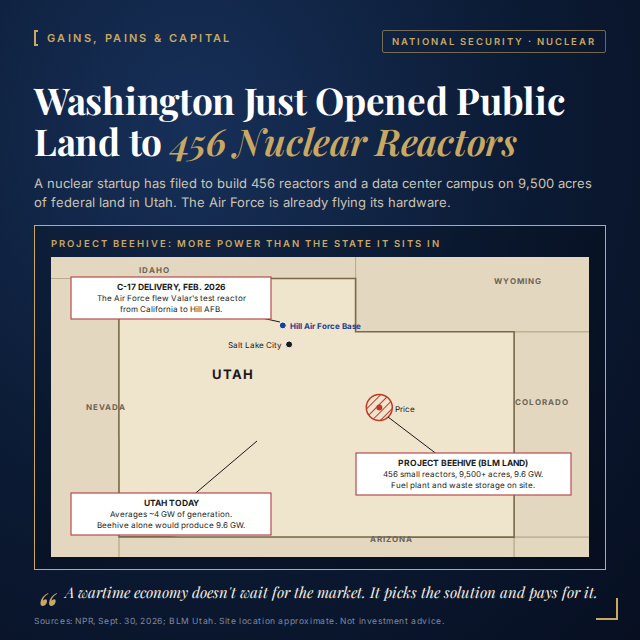
A nuclear startup, Valar Atomics, has submitted an application to the Bureau of Land Management to develop Project Beehive on over 9,500 acres in Price, Utah. The plan includes the construction of 456 small nuclear reactors, a data center campus, a nuclear fuel fabrication facility, and waste storage on-site. This initiative aims to generate approximately 9.6 gigawatts of electricity, surpassing Utah’s current average output of 4 gigawatts. Should the project proceed, non-nuclear construction could start by the end of this year, with the first reactors expected to be operational by 2028.
Despite this ambitious timeline, Valar Atomics has not yet operated a commercial reactor, having only begun producing electricity from its test unit this year. Notably, the U.S. Air Force transported this test reactor from California to Utah in a C-17 jet, emphasizing the federal support behind the effort. The Nuclear Regulatory Commission (NRC) faces pressure from Utah and four other states for expedited licensing processes for such reactors. Recent executive orders from the White House also underscore a national strategy to increase U.S. nuclear capacity by 2050.
The project’s scale presents significant challenges. All reactors will require uranium enrichment at levels currently not produced in the U.S., as much of the country’s supply has historically been imported. To meet the proposed energy output, substantial investment in domestic uranium mining and enrichment facilities is anticipated.
This initiative marks a significant moment in federal involvement in energy infrastructure, reflecting a wartime economy approach where government prioritizes strategic energy solutions.
Why this story matters
- It illustrates the federal government’s strategic push for nuclear energy amidst growth in AI and other industries.
Key takeaway
- Valar Atomics’ proposal highlights the potential for large-scale nuclear projects to play a crucial role in meeting future energy needs.
Opposing viewpoint
- Critics may argue that reliance on untested startups and insufficient domestic uranium production could pose significant risks to energy security and economic stability.