



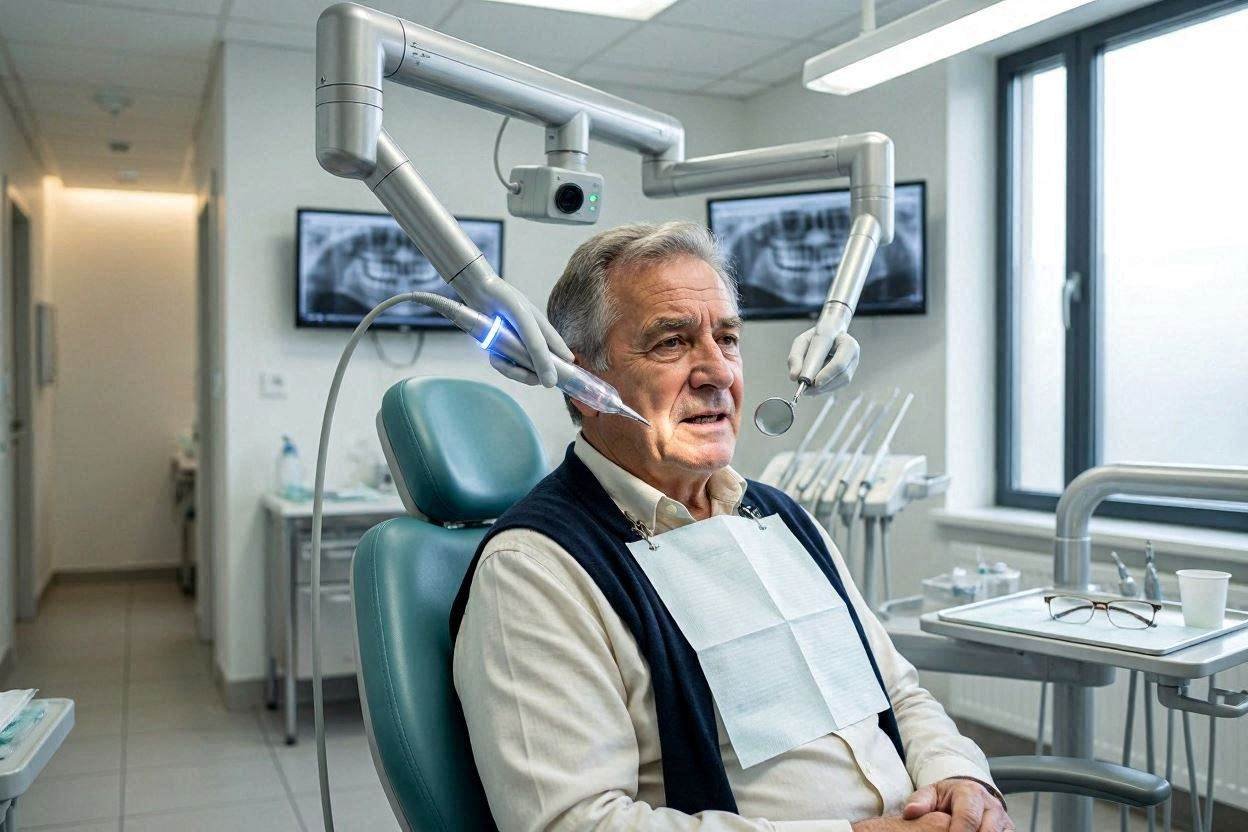
A new development in robotics promises to reshape everyday experiences, including healthcare. Researchers at the University of Basel in Switzerland have created a small robotic prototype designed to assist in dental procedures. This robot, measuring only 43 millimeters, operates by first scanning a patient’s tooth and then preparing it for a permanent crown during a single visit. This innovation aims to enhance consistency and eliminate repetitive tasks for dentists, ultimately improving the patient experience.
The rise of robotics is not limited to dentistry; various industries are already integrating these technologies into their operations. Manufacturing has long utilized robots for tasks like assembling automobiles and moving products, with over 4.6 million industrial robots currently active worldwide. The demand for these machines is on the rise, driven by labor shortages and a growing need for improved productivity.
Robotic applications extend to the medical field with systems like Vitestro’s, which uses ultrasound and AI for more accurate blood draws. In hospitals, robots such as Diligent Robotics’ Moxi are streamlining operations by handling deliveries, allowing nurses to focus more on patient care. Additionally, the hospitality industry is increasingly using service robots to manage tasks such as delivering room supplies and food.
Asia is taking these innovations further, with countries like South Korea and China exploring fully automated retail and hospitality experiences. This trend suggests a future where robots may play a significant role in daily life, raising questions about public acceptance and the extent to which robotics could replace human labor.
Why this story matters: The integration of robotics could significantly enhance efficiency in various industries, from healthcare to hospitality.
Key takeaway: Robotics is rapidly becoming an integral part of everyday life, aiming to improve experiences while addressing labor challenges.
Opposing viewpoint: Concerns exist regarding the potential replacement of human jobs and the ethical implications of relying on robots for sensitive tasks like medical procedures.