

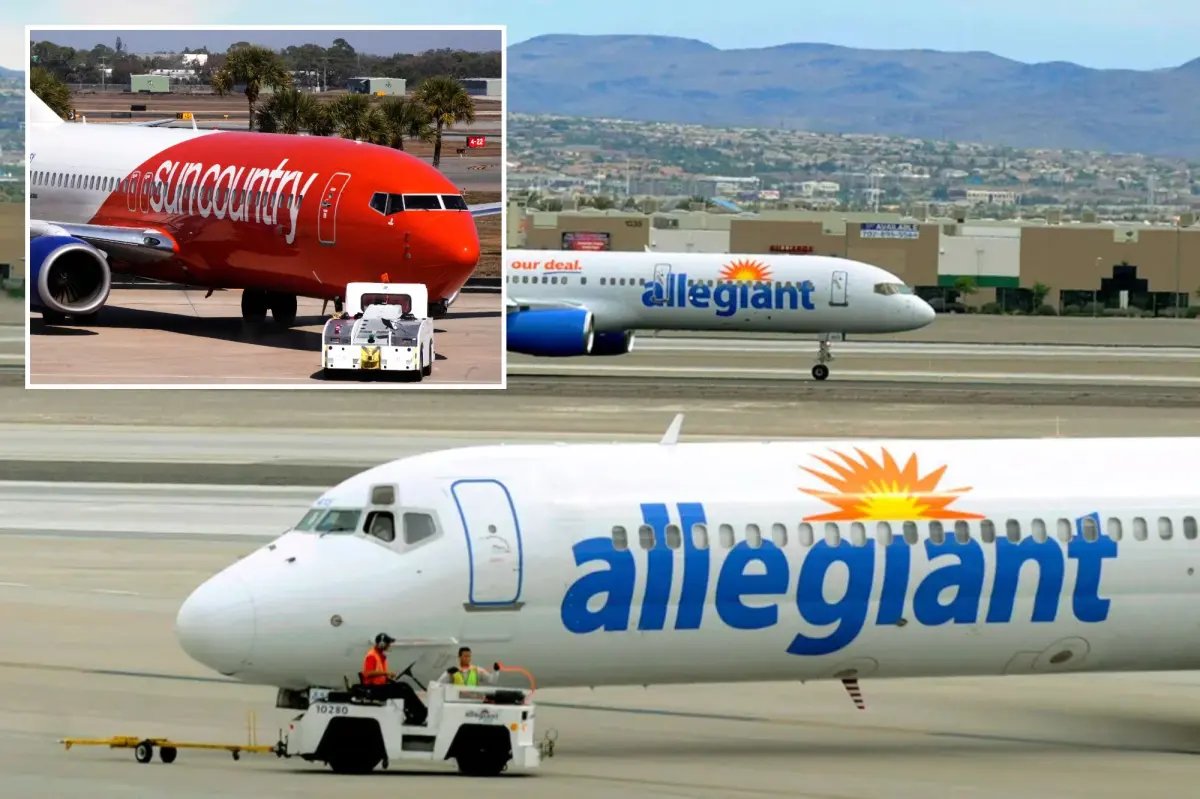
Allegiant Air has finalized its acquisition of Sun Country Airlines, merging the two low-cost carriers amid challenges in the budget airline sector, particularly following the recent shutdown of Spirit Airlines. The Las Vegas-based airline announced that the deal, first disclosed in January and valued at approximately $1.5 billion, successfully closed after receiving necessary regulatory and shareholder approvals.
Allegiant CEO Gregory Anderson emphasized the significance of the merger, stating that it positions the company to enhance access to affordable travel. Both Allegiant and Sun Country are navigating rising jet fuel costs exacerbated by geopolitical instability, which has led to increased fares and fees in the industry. Low-cost carriers, in particular, face heightened challenges as they have less flexibility to absorb these rising expenses.
The merger aims to create new revenue streams, with Sun Country’s operations including cargo services for Amazon and charter flights for various clients, including sports teams and the U.S. Department of Defense. The combined entity is expected to operate a fleet of approximately 195 aircraft, servicing nearly 175 cities and over 650 routes, thereby increasing travel options, especially for smaller and mid-sized markets.
While the merger is complete, both airlines will continue to operate independently for the time being, ensuring customers can book and manage their trips as before. Looking ahead, Allegiant plans to integrate the two airlines under its branding while maintaining Minneapolis–St. Paul as a vital hub.
Why this story matters:
- The merger reflects a strategic response to recent industry challenges, aiming to enhance sustainability amid rising operational costs.
Key takeaway:
- Allegiant Air and Sun Country Airlines combine forces to broaden their reach and improve revenue generation in a competitive market.
Opposing viewpoint:
- Critics may argue that mergers in the airline industry can reduce competition, potentially leading to higher fares and fewer choices for consumers in the long run.