


Constellation Brands, a leading player in the beverage industry, released its first-quarter results for fiscal year 2027 on June 30. The company reported revenues of $2.43 billion, surpassing analysts’ expectations of $2.39 billion. However, it fell short on earnings per share (EPS), reporting $3.43 compared to the anticipated $3.70. Nonetheless, this EPS figure reflected year-over-year growth, prompting management to raise their full-year EPS guidance to a range of $11.50 to $12.20.
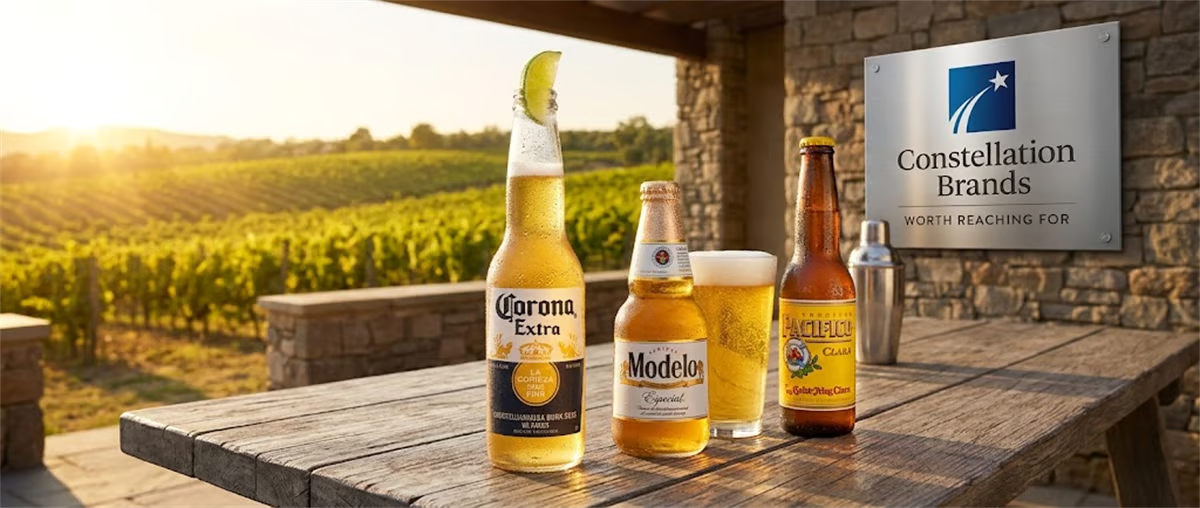
Despite the positive revenue and upward guidance, the company’s stock has struggled, trading around $130, which is significantly lower than its 200-day moving average of approximately $146. Constellation’s beer segment saw a modest net sales increase of 2%, driven by enduring favorites like Modelo Especial and Corona Extra, whereas the wine and spirits division faced challenges, with reported net sales down 47% due to previously divested brands. Excluding these divestitures, organic growth was noted.
In the context of changing consumer preferences, Constellation’s management highlighted a discerning consumer base, especially among lower-income households, while premium brands continue to thrive. The company returned over $400 million to shareholders through buybacks and dividends, demonstrating its commitment to shareholder value under the leadership of new CEO Nicholas Fink.
Looking ahead, Fink outlined a strategy focused on occasion-based growth to enhance brand selection, emphasizing the potential of Modelo Especial and the growth of Pacifico and Mi CAMPO. While concerns remain regarding the broader alcohol consumption trends and operational risks, the results indicate that preferred brands could weather market fluctuations effectively.
Why this story matters
- Investors are focusing on future growth prospects rather than just past performance, impacting stock valuation.
Key takeaway
- Constellation Brands is navigating challenges while committing to shareholder value and potential growth strategies.
Opposing viewpoint
- Some analysts remain skeptical about long-term consumption trends within the beverage alcohol category despite recent performance improvements.